By RWT Robotics Editorial Team Published
CONFIRMED
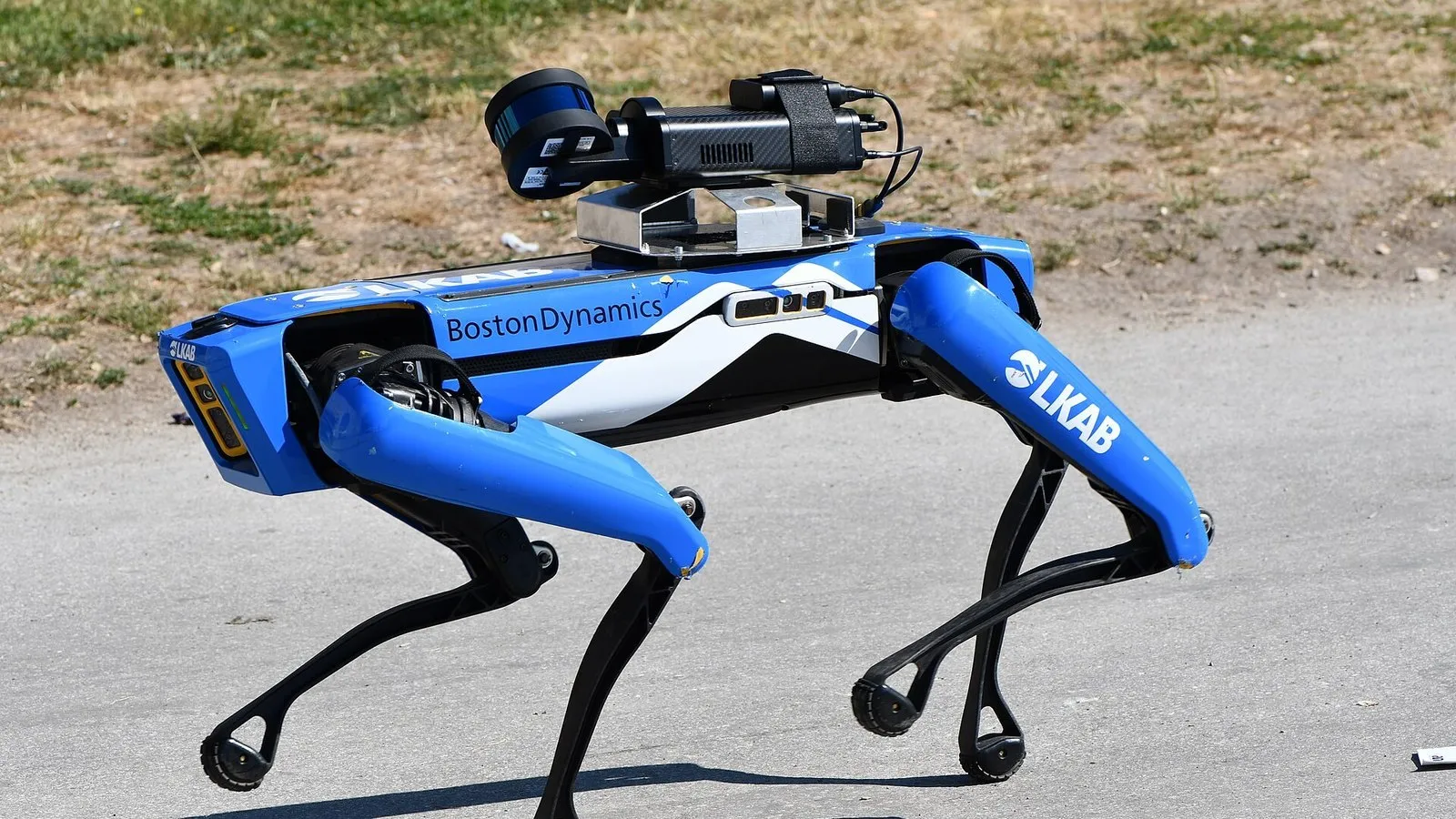
Boston Dynamics and GlobalFoundries have expanded their collaboration so that Atlas humanoids will be evaluated at GlobalFoundries’ semiconductor facility in Malta, New York, beginning in early 2027. Boston Dynamics says this is Atlas’s first deployment outside the automotive industry. The company also makes clear that this is an evaluation, not a production rollout or a purchase.
What we know
The core facts come from Boston Dynamics’ own announcement, “Boston Dynamics & GlobalFoundries Expand Robotics Collaboration.” The two companies will evaluate Atlas humanoid robots at GlobalFoundries’ semiconductor manufacturing facility in Malta, New York. The work is scheduled to begin in early 2027.
Boston Dynamics calls this Atlas’s first deployment outside the automotive industry. The word “deployment” deserves some care. The same announcement describes the planned work as an evaluation at the facility. It is not an announced production deployment, and it is not a confirmed purchase of Atlas robots. Both of those points come from Boston Dynamics, so this is not a skeptical outsider reading between the lines. The company is drawing the boundary itself.
The Robot Report covered the news under the headline “Boston Dynamics’ Atlas humanoid lands first non-automotive trial.” It cited the companies’ announcement. That is useful confirmation that the trade press reads the news the same way, but it is not independent reporting on what happens inside the fab. Every substantive fact here traces back to the companies.
The announcement is also framed as an expansion. Boston Dynamics and GlobalFoundries already had a collaboration of some kind. The Atlas evaluation builds on it rather than starting a new relationship from nothing.
Some context on the robot. In 2024, Boston Dynamics announced that it was retiring the hydraulic Atlas and developing an all-electric version. When Boston Dynamics and Hyundai later presented the electric Atlas, they named Hyundai’s automotive manufacturing operations as an intended application area. That is why the GlobalFoundries evaluation matters to the company’s story: Boston Dynamics itself describes it as the first time Atlas goes outside that automotive lane.
What we don’t know yet
Most of what an engineer would want to know is missing from what has been announced.
What Atlas will actually do. Boston Dynamics has not described specific tasks. A semiconductor facility has many kinds of work, and “evaluate a humanoid” could mean anything from a narrow pilot at one station to a broad survey of possible jobs. Until the companies say which, the scope of the trial is an open question.
How many robots. The announcement uses the plural, “Atlas humanoid robots.” It does not give a number, and one robot in a test cell is a very different exercise from a small fleet working real shifts.
How long, and when exactly. “Early 2027” is the only timing given. No end date, no phases and no milestones have been announced.
What counts as success. Neither company has published criteria. We don’t know whether GlobalFoundries is measuring throughput, uptime, safety incidents, the number of tasks completed without human help, or something else entirely. Without those, a future “successful trial” announcement will be hard to judge.
What comes after. There is no announced path from evaluation to purchase or production use. Boston Dynamics says plainly that neither has been confirmed.
Cost. No price for Atlas, and no commercial terms for this arrangement, have been disclosed.
What it means
Start with the date. The evaluation starts in early 2027, so today the news is a plan. Plans in robotics slip often enough that a start date is a scheduled ambition, not a delivered result. That is not a criticism of Boston Dynamics specifically. It is how hardware works.
Next, the vocabulary. Humanoid announcements tend to blur three different stages: a trial, a deployment and a purchase. This one is unusually clear about which stage it is. Boston Dynamics uses the word “deployment” in its framing, but it also states that the work is an evaluation with no confirmed purchase. The honest summary is the one The Robot Report used: a trial. If you see this news later described as Atlas “working in chip fabs,” that is a stretch the source does not support.
The meaningful part is the category shift. Until now, the public application story for the electric Atlas has centered on automotive manufacturing alongside Hyundai. A second industry gives Boston Dynamics a chance to show that Atlas is not tuned to one customer’s factory. Whether it actually shows that depends entirely on what the robot is asked to do, which brings us back to the missing details.
There is also a reason to be cautious about reading too much into a single partner. One evaluation at one facility tells us that GlobalFoundries is interested enough to host a test. It does not tell us that semiconductor manufacturing as a whole is ready for humanoids, or that the economics work. Those are claims that would need results, and results would need published metrics.
What would make this real progress rather than a press milestone? Specific tasks named up front. A number of robots. Some measure of performance that an outsider could check. And eventually, a decision either way about moving beyond evaluation. Boston Dynamics has given us the where and the roughly when. The what is the part worth watching once 2027 arrives.
Until then, the accurate headline is the modest one: Atlas has a second industry lined up for a test, and the test hasn’t started.
Follow every development in one place on our humanoid robot tracker.
Keep reading
 Robotics NewsUniX AI reportedly raises $75M pre-A as Huawei Cloud pushes CloudRobo WM1.2Huawei Cloud's event page lists CloudRobo WM1.2, an Ascend-native world model. A $75M UniX AI pre-A round is…Nov 17, 2026 · 5 min read
 Robotics NewsSpaceX reportedly readying Optimus robots for uncrewed Starship Mars flightReports say SpaceX is readying Optimus for a Starship Mars flight. The claim has no primary source and…Nov 15, 2026 · 4 min read
 Robotics NewsHumanoid startup Foundation missed payroll after lending CEO $4.6 million, CNBC saysCNBC reports Eric Trump-backed Foundation has not paid staff since Oct. 30 and lent its CEO $4.6 million,…Nov 14, 2026 · 5 min read
Credits and sources
By RWT Robotics Editorial Team
- Published