
By RWT Robotics Editorial Team Published
RUMOR
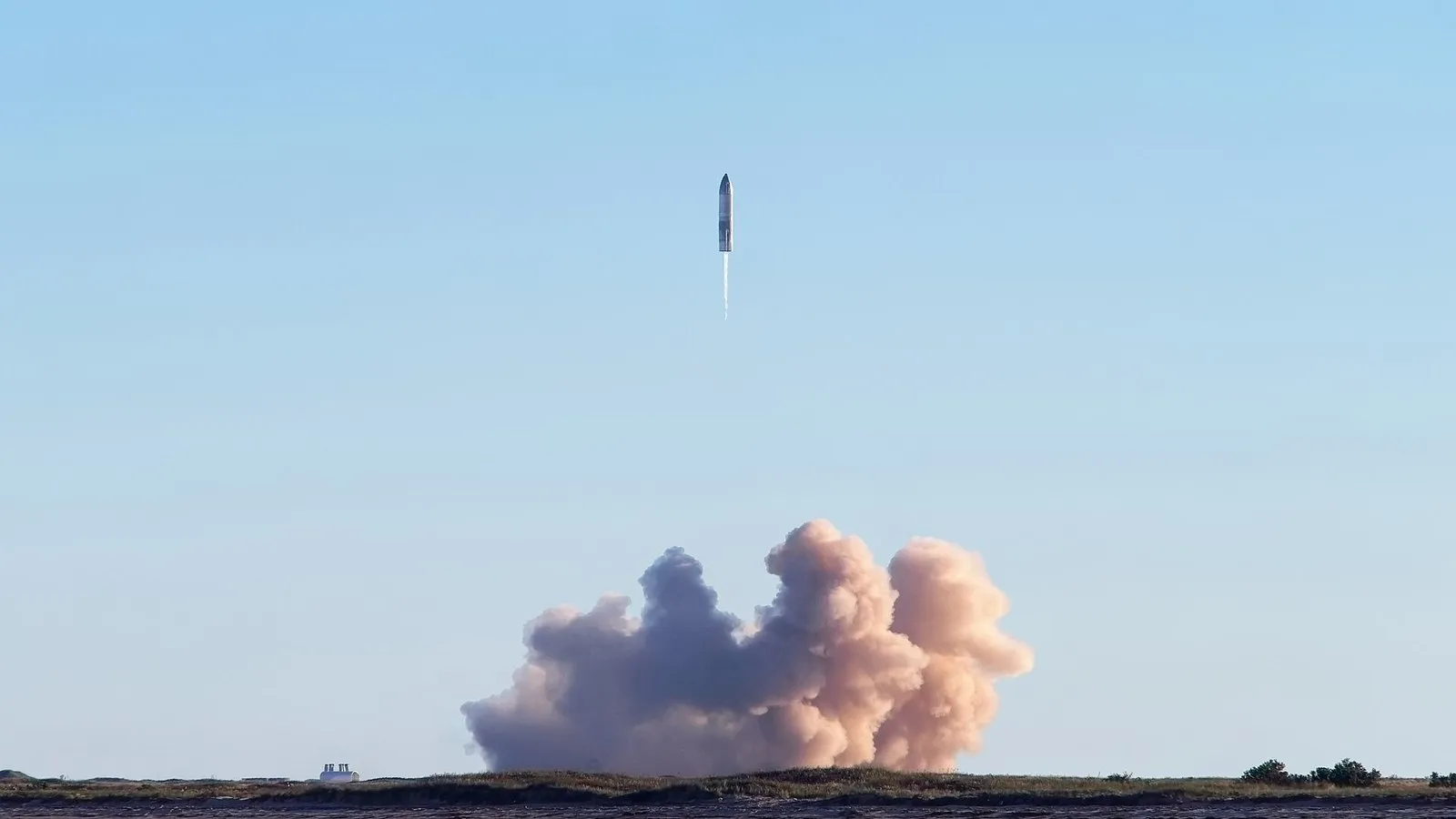
A cluster of aggregator stories claims SpaceX is readying Tesla Optimus humanoid robots to fly on an uncrewed Starship to Mars, with cargo missions possibly starting in 2028. We found no primary source, filing or named insider behind the “readying” framing. What does exist is a trail of Elon Musk statements whose dates have already moved once and whose odds have moved twice.
What we know
Everything solid here is a statement by Musk, not a mission plan. That distinction matters, and it is the whole story.
Al Jazeera, carrying Reuters-syndicated reporting, quoted Musk saying SpaceX had about a 50-50 chance of launching an uncrewed Starship to Mars in the late-2026 window. He said that first flight would carry Tesla Optimus robots. He also made the odds conditional on solving orbital refilling, the transfer of propellant between vehicles in orbit. Our background timeline puts that statement at May 30, 2025.
Then the odds moved. In August 2025, according to Wccftech reporting Musk’s statement, he lowered the chance of a 2026 Mars flight to a “slight chance” and said 2028 was the more likely date for the uncrewed flight. He also suggested crewed flights could follow around 2030. Wccftech is not on our approved outlet list, so treat the precise wording with some caution. Still, the direction is clear: the date slipped, and Musk said so himself.
That downgrade is why we mark the end-2026 departure claim as debunked. By Musk’s own later account, the 2026 window was never a firm plan, and no 2026 Mars launch is planned. We are now in that window, and nothing on our desk suggests a Mars-bound Starship is about to leave.
What is rumored
NewsBytes, Moneycontrol and Inshorts have run stories saying SpaceX is “readying” Optimus robots for an uncrewed Starship Mars mission, with cargo flights possibly beginning in 2028. We grade this D. These are aggregators, the original reporter is unclear, and none of them cites a named insider, a filing or a document.
As far as we can reconstruct, the stories repackage Musk’s earlier statements alongside a SpaceX web page that reportedly describes Mars cargo flights as “no earlier than 2028.” We could not verify that page directly. Even taken at face value, “no earlier than” sets a floor, not a schedule.
The word “readying” implies physical work: robots being qualified, integrated or packed for flight. Nothing we found supports that. A restated aspiration has been relabeled as preparation.
What we don’t know yet
We have nothing on whether orbital refilling, the condition Musk himself attached to the Mars odds, has been solved. Without it, the timeline is unanchored by his own logic.
We also have nothing on what Optimus would actually do on Mars. No source we found states whether its tasks there would be autonomous or teleoperated. We did not evaluate any demo footage. So we cannot say Optimus has shown any capability that would justify a Mars cargo slot. We are not saying it has failed. We are saying nobody has put evidence on the table.
One report says SpaceX shifted its near-term priority to the Moon by February 2026. We could not verify this against a primary source, so we are not weighing it either way. If it holds up, it would push Mars cargo plans further back.
Finally, we do not know whether any Mars-bound hardware, robotic or otherwise, has a manifest, a payload integration schedule or a regulatory filing. Those are the documents that separate a mission from a talking point.
What it means
As engineers, we read this as a sequence of goals, not a program. A real interplanetary cargo mission leaves a paper trail: payload specs, environmental qualification, launch licensing, and a concept of operations for what happens after landing. None of that appears in the sourcing here. What appears is one man’s probability estimate, revised downward, then amplified by sites that dropped the probability and kept the headline.
Look at the specific claim about the robots. Sending a humanoid to Mars on an uncrewed lander is a very hard robotics problem. It would have to survive launch loads, months of cruise, entry and landing. Then it would have to do useful work with a communication delay that rules out the kind of real-time remote control people often take for granted on Earth. That last point is why autonomy versus teleoperation is the key question. No source we found answers it.
We are not the skeptics who think nothing on these slides will ever fly. SpaceX has a record of eventually building things people called impossible. But “eventually” has carried a lot of weight in Musk’s Mars timelines. The aggregators themselves describe a slide from 2024 to 2026 to 2028 and beyond. A 50-50 that became a “slight chance” is a moving target, not a commitment.
Here is what would change our grade. A primary SpaceX or Tesla statement describing Optimus flight qualification. A verified manifest or filing. Public evidence that orbital refilling works. Or demo footage showing Optimus doing Mars-relevant tasks, with honest disclosure of how much a human was in the loop. Until one of those arrives, “SpaceX is readying Optimus for Mars” stays where the evidence puts it: an aspiration repeated often enough to sound like a plan.
Follow every development in one place on our humanoid robot tracker.
Keep reading
 Robotics NewsHumanoid startup Foundation missed payroll after lending CEO $4.6 million, CNBC saysCNBC reports Eric Trump-backed Foundation has not paid staff since Oct. 30 and lent its CEO $4.6 million,…Nov 14, 2026 · 5 min read
 Robotics NewsNvidia CEO Huang resigns, leaving Thor and GR00T robotics partners with questionsHuang resigned after a personal scandal, per CNBC and CNN. What it means for Thor and GR00T users,…Nov 13, 2026 · 5 min read
 Robotics NewsAsus Gallop humanoid targets human-pace packing, but speed is unverifiedAsus says its Gallop humanoid is training to pack 15 motherboard parts at human pace. The 99.5% target…Nov 13, 2026 · 4 min read
Credits and sources
By RWT Robotics Editorial Team
- Published