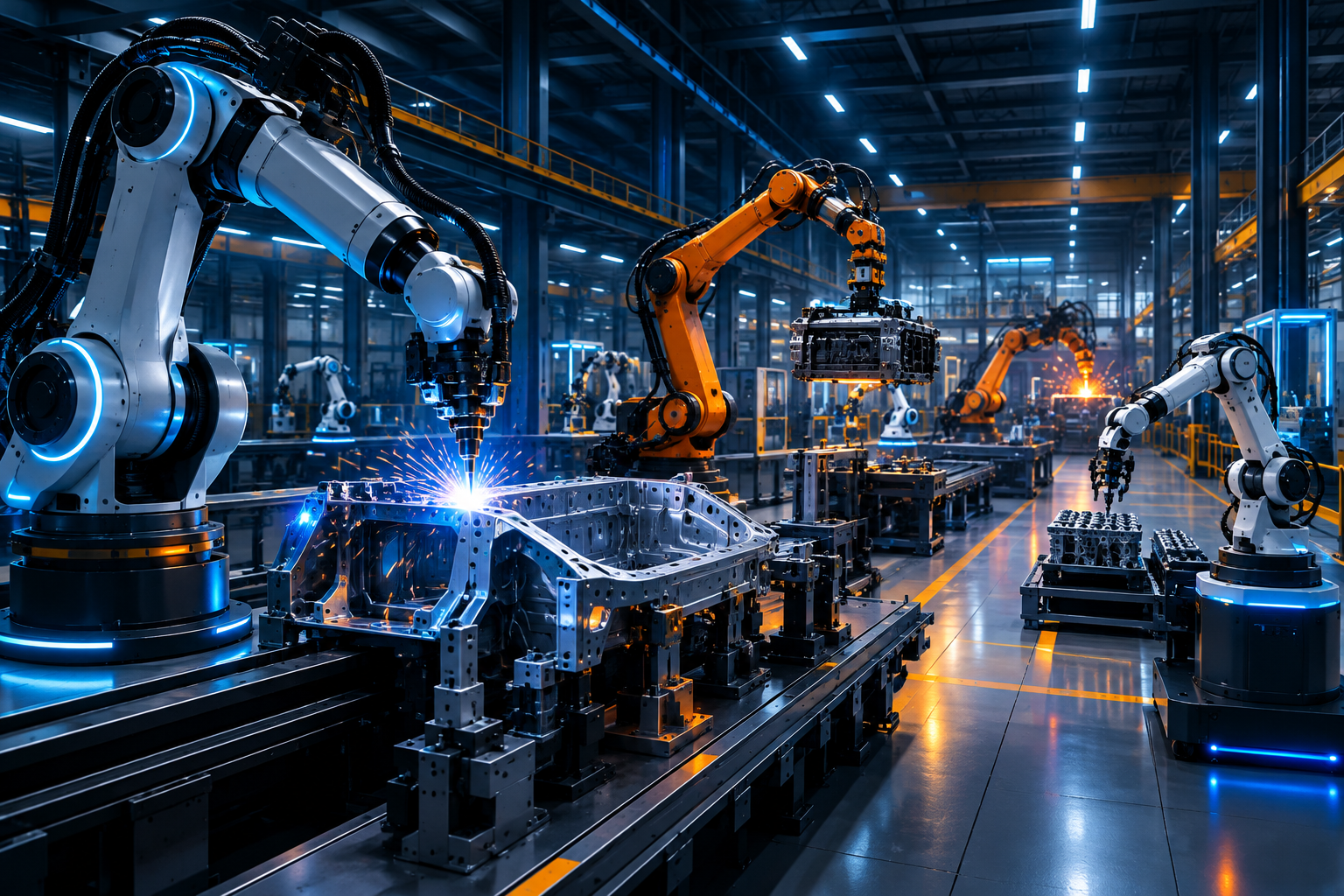
Most lists of robotics companies mix shipping industrial giants with startups that have only posted a video. We ranked the leaders by robots in the field, revenue, and technology other companies depend on, and we flag every demo that has not become a product.
How we picked the best robotics companies
Search “best robotics” and you get stock pitches, regional directories and humanoid hype reels. We used four tests and weighted them in this order:
- Deployed hardware at scale. Robots doing paid work in factories, warehouses, hospitals or homes count most. Pilots count less. Videos count least.
- Revenue and staying power. A company that sells robots profitably for decades has proven something a seed-stage startup has not.
- Platform influence. Some companies matter because everyone else builds on their controllers, chips, drivers or software.
- Credible trajectory. For younger firms, we looked at funding, named customers and whether independent reporting backs up company claims.
We did not rank by market cap, and we give no stock tips. Several of the most important robotics companies are not even listed on their own. They sit inside a conglomerate, which matters for investors and we cover it near the end.
Engineer's note
When a robotics company says “deployed,” ask three things: how many units, how many hours per week, and who is standing nearby. A single robot running a supervised shift and a fleet running unattended both get called deployments in press releases.
The market these companies operate in
Context first, because the ranking only makes sense against the real numbers. The International Federation of Robotics (IFR) publishes the most widely used census of industrial robots. Its World Robotics 2024 report counted 541,302 industrial robots installed worldwide in 2023, the second-highest year on record, with an operational stock of about 4.28 million units.
China dominates that demand. The IFR’s 2025 edition put 2024 installations at roughly 542,000 units, with China alone near 295,000 and Chinese suppliers taking a majority of their home market for the first time. That shift explains why names like Unitree now show up on lists that used to be all Japanese, German and Swiss.
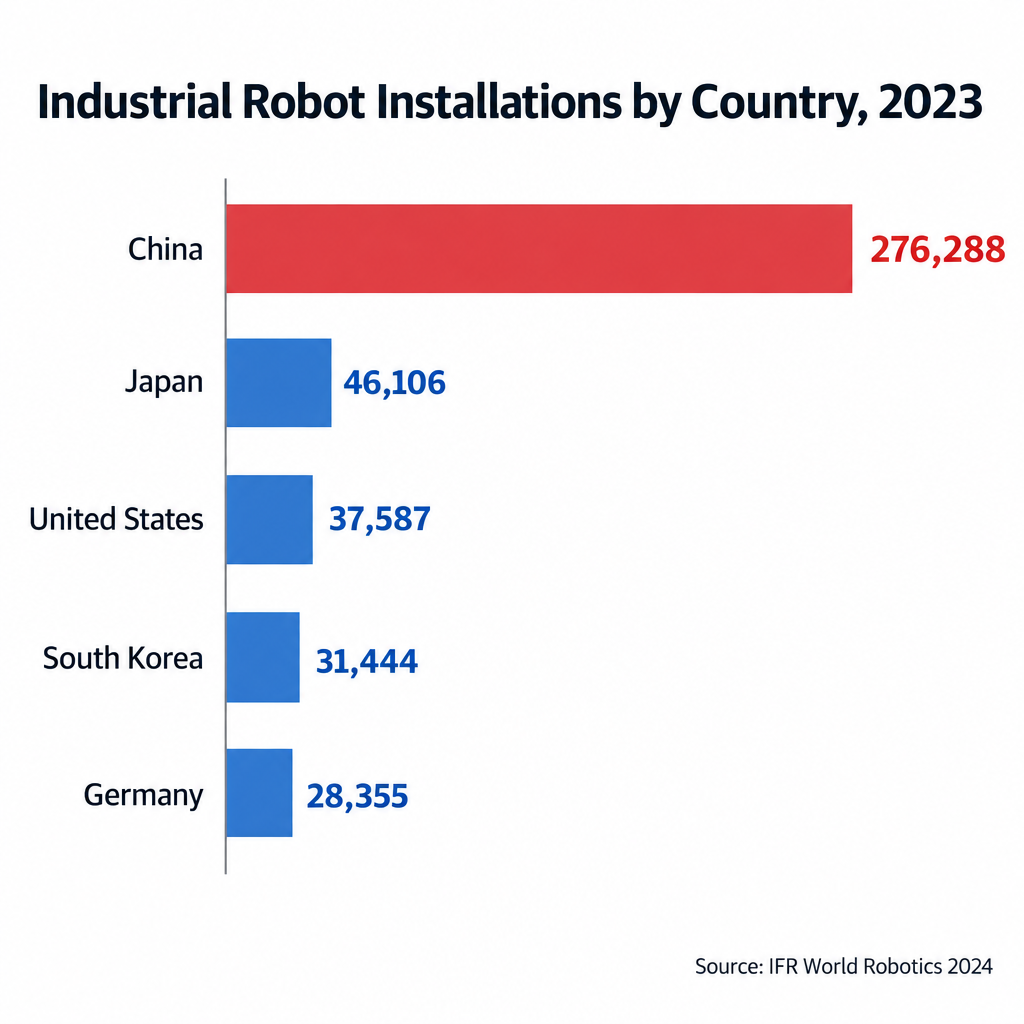
Industrial robot installations by country, 2023
| Country | New installations (2023) | Share of global total |
|---|---|---|
| China | 276,288 | 51% |
| Japan | 46,106 | 9% |
| United States | 37,587 | 7% |
| South Korea | 31,444 | 6% |
| Germany | 28,355 | 5% |
| World total | 541,302 | 100% |
Source: IFR World Robotics 2024.
Robot density: who automates most intensely
Installations measure volume. Density, the number of robots per 10,000 manufacturing employees, shows how deeply automation has gone into each economy.
| Country | Robots per 10,000 manufacturing workers (2023) |
|---|---|
| South Korea | 1,012 |
| Singapore | 770 |
| China | 470 |
| Germany | 429 |
| Japan | 419 |
| United States | 295 |
Source: IFR, robot density report published November 2024.
China passing Germany and Japan on density is the critical data point. It means the world’s largest robot market is also rapidly maturing, and suppliers who cannot compete there on price are losing their growth engine.
Quick-reference comparison table
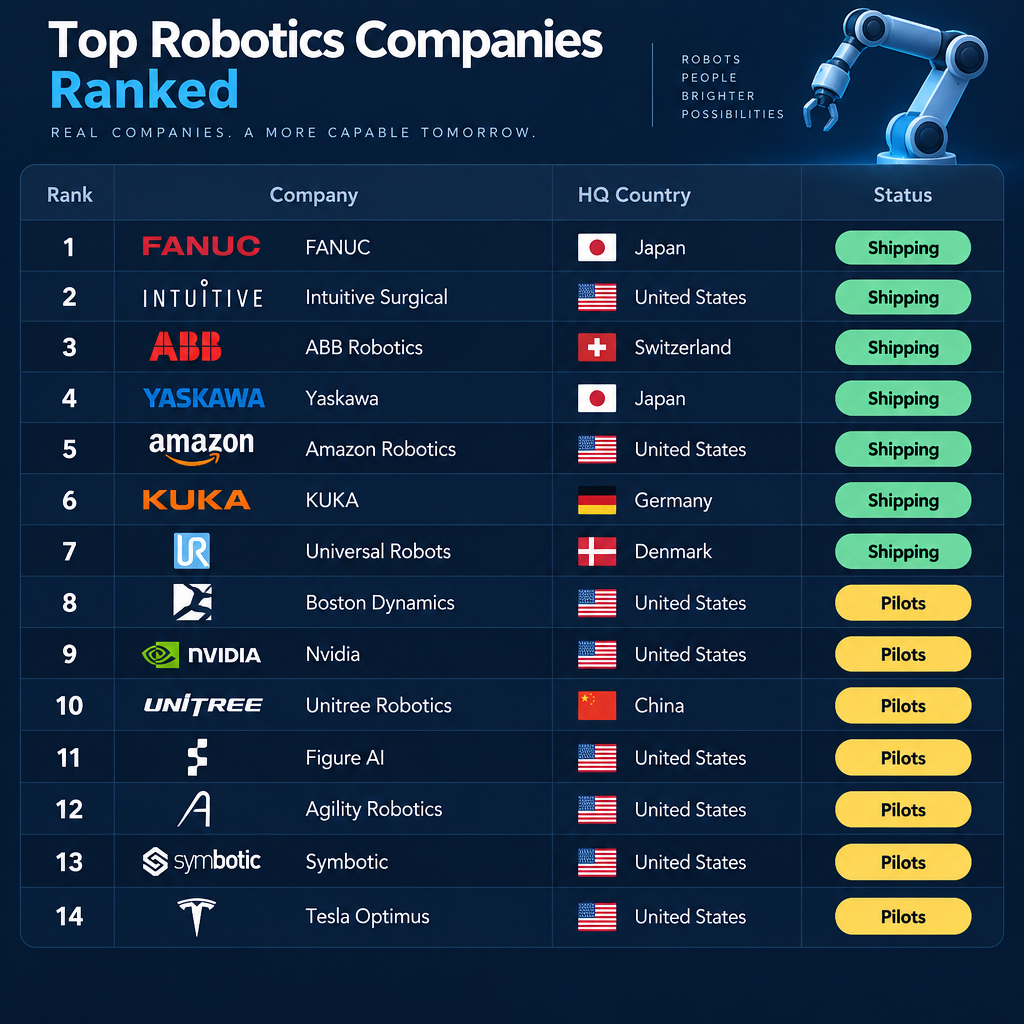
Here is the full ranking at a glance before we go company by company.
| Rank | Company | HQ | Ownership | Core robots | Status |
|---|---|---|---|---|---|
| 1 | FANUC | Japan | Listed (Tokyo) | Industrial arms, cobots | Shipping at scale |
| 2 | Intuitive Surgical | USA | Listed (Nasdaq) | Surgical systems | Shipping at scale |
| 3 | ABB Robotics | Switzerland/Sweden | Being sold to SoftBank | Industrial arms, cobots, AMRs | Shipping at scale |
| 4 | Yaskawa | Japan | Listed (Tokyo) | Motoman arms, drives | Shipping at scale |
| 5 | Amazon Robotics | USA | Amazon division | Warehouse robots | Internal use at scale |
| 6 | KUKA | Germany | Midea Group | Industrial arms | Shipping at scale |
| 7 | Universal Robots | Denmark | Teradyne | Collaborative arms | Shipping at scale |
| 8 | Boston Dynamics | USA | Hyundai Motor Group | Spot, Stretch, Atlas | Spot and Stretch shipping |
| 9 | Nvidia | USA | Listed (Nasdaq) | Robot compute and sim | Shipping (platform) |
| 10 | Unitree Robotics | China | Private, IPO process | Quadrupeds, humanoids | Shipping |
| 11 | Figure AI | USA | Private | Humanoids | Pilots |
| 12 | Agility Robotics | USA | Private | Digit humanoid | Early commercial |
| 13 | Symbotic | USA | Listed (Nasdaq) | Warehouse automation | Shipping |
| 14 | Tesla (Optimus) | USA | Listed (Nasdaq) | Humanoid | Not for sale |
The ranked list of top robotics companies
1. FANUC: our top pick
FANUC is our clear top pick among leading robotics companies. It spun out of Fujitsu in 1972, and it still builds the CNC controllers that run a large share of the world’s machine tools. That controller heritage is the quiet reason its robots are so dependable. The motion control, servo motors and software all come from one company.
The product range runs from small SCARA and delta robots up to the M-2000iA series, which FANUC rates for payloads up to 2.3 tonnes. Its CRX collaborative line covers lighter work, with models up to 30 kg payload and a tablet interface aimed at shops that have never programmed a robot.
What makes FANUC the leader is boring in the best way. Automotive plants, electronics lines and job shops run its robots for years with minimal downtime. Integrators know the platform, spare parts are everywhere, and the second-hand market is deep. FANUC is widely cited as having the largest installed base of industrial robots of any maker.
Shipped vs demo: Everything FANUC sells is production hardware. It does not chase humanoids, which is a feature for buyers and a frustration for people who want headlines.
The weakness: Price pressure from Chinese suppliers, who now win the majority of China’s own market, and a slower embrace of open software than some rivals.
2. Intuitive Surgical
Intuitive is the most commercially successful robotics business that most people never think of as a robotics company. Founded in 1995 in Sunnyvale, California, it makes the da Vinci surgical system, where a surgeon at a console controls instruments inside the patient through small incisions.
The numbers are what earn it second place. Intuitive reported 2024 revenue of about $8.35 billion, da Vinci procedure growth of roughly 16% for the year, and an installed base close to 10,000 systems at the end of 2024. The company makes much of its money on instruments and service per procedure. That recurring model is the envy of the robotics industry.
The FDA cleared the fifth-generation da Vinci 5 in March 2024. Its headline feature is force feedback, letting surgeons feel how hard instruments push on tissue, plus far more onboard compute than the previous Xi. Intuitive also sells Ion, a robotic catheter system for lung biopsies.
Shipped vs demo: All shipped and regulated. Medical robots cannot fake it, because every claim goes through regulators.
Competition: Medtronic’s Hugo and CMR Surgical’s Versius are approved in various markets, and Johnson & Johnson is developing its own system. None has come close to Intuitive’s installed base yet.
3. ABB Robotics
ABB Robotics is one of the “Big Four” industrial robot makers alongside FANUC, Yaskawa and KUKA. It builds the IRB family of industrial arms, the GoFa and SWIFTI collaborative robots, and the YuMi dual-arm robot, which launched in 2015 as one of the first robots designed to work shoulder to shoulder with people. Through its 2021 acquisition of ASTI Mobile Robotics, it also sells autonomous mobile robots.
The big recent news is ownership. In April 2025, ABB announced plans to spin the robotics division off as a separate listed company. In October 2025 it changed course and agreed to sell the division to SoftBank Group for $5.375 billion. ABB said the business had about 7,000 employees and roughly $2.3 billion in 2024 revenue. The deal was expected to close in mid-to-late 2026, pending regulatory approvals.
Why it ranks here: ABB has deep positions in automotive, electronics and logistics, a large factory in Shanghai that serves the Chinese market from inside, and strong simulation software in RobotStudio.
Reality check
SoftBank’s plans for ABB Robotics after closing are not public in detail. Until the sale completes and new ownership sets a strategy, treat any “physical AI” roadmap stories as speculation.
4. Yaskawa Electric
Yaskawa was founded in 1915 in Kitakyushu, Japan, and sells its robots under the Motoman brand. Like FANUC, it is also a giant in motion control. Yaskawa servo drives and inverters sit inside machines built by other companies, so its influence on industrial automation goes well beyond the robots with its name on them.
Motoman arms are especially strong in arc welding, painting and material handling. Its HC series covers collaborative applications, and the MOTOMAN NEXT line, introduced in 2023, adds onboard compute aimed at robots that adapt to variation instead of replaying a fixed program.
Shipped vs demo: Production hardware throughout.
Why fourth and not higher: Yaskawa’s results swing more with semiconductor and Chinese manufacturing cycles than FANUC’s. That is a market-exposure point, not a quality one.
5. Amazon Robotics
Amazon does not sell robots to anyone else, yet no list of top robotics companies is honest without it. Amazon bought Kiva Systems in 2012 for $775 million, renamed it Amazon Robotics, and stopped selling Kiva robots to outside customers. That single move created a gap in the warehouse market that a dozen startups have tried to fill since.
In July 2025, Amazon said it had deployed its one millionth robot across its fulfillment network. The fleet includes drive units that carry shelving pods, the Proteus autonomous mobile robot, robotic arms such as Sparrow and Robin for picking and sorting, and Vulcan, unveiled in May 2025, which uses touch sensing to stow and pick items from crowded bins.
Amazon also announced DeepFleet, a foundation model that coordinates robot movement. The company said it improves fleet travel efficiency by 10%. At a million robots, 10% is an enormous amount of saved motion and energy.
Shipped vs demo: Shipped into its own operations. Vulcan was still described as early deployment at launch, so we count it as real but not yet at fleet scale.
6. KUKA
KUKA traces its history to 1898 in Augsburg, Germany. Its orange robots are a fixture in German car plants, and its LBR iiwa, a sensitive lightweight arm developed from work with the German Aerospace Center (DLR), helped define what force-controlled collaborative robots could do.
China’s Midea Group took control of KUKA in 2017 and completed a squeeze-out of minority shareholders in 2022, so KUKA is no longer listed. That ownership gives KUKA an unusual position: a European engineering heritage with a Chinese parent that opens doors in the world’s biggest robot market.
Shipped vs demo: Fully shipping. KUKA also sells automation systems and logistics equipment through its Swisslog unit.
Why sixth: Strong technology, but exposure to the European auto industry, which has been under heavy pressure, weighs on its outlook.
7. Universal Robots (Teradyne Robotics)
Universal Robots, founded in 2005 in Odense, Denmark, created the modern collaborative robot market. Its first UR5 went on sale in 2008. The pitch was simple: a light arm that a technician can program by moving it by hand, safe enough to work near people without a cage in many applications after a risk assessment.
Test and measurement company Teradyne bought UR in 2015 for $285 million and added Mobile Industrial Robots (MiR) in 2018. The two now operate as Teradyne Robotics. The UR lineup has grown from the original 3, 5 and 10 kg payload arms to the UR20 and UR30 for heavier palletizing and machine tending.
UR’s biggest advantage is its ecosystem. Hundreds of grippers, cameras and software tools are certified for its UR+ program, and it is the arm most robotics startups prototype on.
Engineer's note
Universal Robots maintains its own ROS 2 driver, which is one reason research labs and startups default to UR arms. The driver supports the current long-term-support distributions, Humble Hawksbill and Jazzy Jalisco.
For readers who want to see how low the barrier is, this is the standard install and launch pattern from the driver’s documentation on a ROS 2 Jazzy machine:
sudo apt-get install ros-jazzy-ur
ros2 launch ur_robot_driver ur_control.launch.py ur_type:=ur5e robot_ip:=192.168.56.101
Swap ur5e for your model and the IP for your controller. Run it against URSim, UR’s simulator, before you touch real hardware.
Why seventh: Cobot pioneer, but Chinese cobot makers now undercut it heavily on price, and Teradyne has restructured the robotics group more than once.
8. Boston Dynamics
Boston Dynamics started in 1992 as a spin-off from MIT, led by Marc Raibert. It has changed hands three times: Google bought it in 2013, SoftBank in 2017, and Hyundai Motor Group took a controlling stake in 2021 in a deal that valued the company at about $1.1 billion.
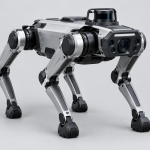
For years it was famous for videos and short on products. That changed with Spot, which went on commercial sale in 2020 at a launch price of $74,500. Spot now does industrial inspection in power plants, refineries and factories, reading gauges and capturing thermal images on routes it repeats autonomously. If you want the bigger picture on four-legged machines, our “dog robot” explainer covers what modern models can and cannot do.
Stretch is the quieter commercial story. It unloads boxes from trucks and containers, and DHL has been a major customer, announcing plans in 2025 to deploy more than 1,000 additional units.
Atlas is the headline act. Boston Dynamics retired the hydraulic Atlas in April 2024 and unveiled an all-electric version, with Hyundai’s car plants named as the first real workplace. The company has also partnered with Toyota Research Institute on large behavior models for Atlas.
Shipped vs demo: Spot and Stretch are shipping products with paying customers. Atlas is still pre-commercial, and many of its videos show tasks in controlled settings.
9. Nvidia
Nvidia does not build robots. It ranks on this list because a large share of the robotics industry now builds on its hardware and software, and that dependency is a form of leadership.
Its robotics stack includes Jetson modules for onboard compute, Isaac Sim and Isaac Lab for simulation and robot learning, Isaac ROS for accelerated ROS 2 packages, and Cosmos world models for generating synthetic training data. In March 2025 it released GR00T N1, an open foundation model for humanoid robots. In August 2025 it began shipping the Jetson AGX Thor developer kit at $3,499, pitched as the brain for humanoids and other high-compute robots.
Why it matters for buyers: If you are building a mobile manipulator or humanoid today, you will likely face a choice between Nvidia’s integrated tools and a more open but more manual stack. The data pipelines and simulation are the real lock-in, not the chip.
10. Unitree Robotics
Unitree, founded in 2016 by Wang Xingxing in Hangzhou, has done more than anyone to drag legged robot prices down. Its Go2 quadruped starts around $1,600. Its G1 humanoid launched in May 2024 at 99,000 yuan, about $16,000, and in late July 2025 it announced the R1 humanoid at 39,900 yuan, widely reported as a $5,900 starting price.
Those prices are why Unitree hardware now fills university labs and startup prototyping benches around the world. Its H1 humanoids also reached a huge audience when they danced on China’s Spring Festival Gala broadcast in January 2025.
The company started its process to list on Shanghai’s STAR Market in 2025. Investors should read our “unitree valuation warning” piece first: it covers the company’s own filing, which flags valuation risk, and a price-to-earnings multiple far above the industry average.
Shipped vs demo: The hardware ships. The acrobatics in its videos are real hardware, but they are pre-programmed or trained routines, not general-purpose autonomy. Most useful G1 behavior still requires the buyer to write or train the software.
11. Figure AI
Figure, founded in 2022 by Brett Adcock, is the best-funded humanoid startup in the United States. It raised a $675 million Series B in February 2024 at a $2.6 billion valuation, with Microsoft, Nvidia, OpenAI and Jeff Bezos among the investors. In September 2025 it announced a Series C of more than $1 billion at a $39 billion post-money valuation.
The company ended its model collaboration with OpenAI in February 2025 and unveiled Helix, its own vision-language-action model for controlling the robot’s upper body. It introduced Figure 03 in October 2025, with redesigned hands and a focus on home as well as industrial use.
Figure’s flagship customer story is BMW’s plant in Spartanburg, South Carolina. Reporting by Fortune in 2025 questioned whether that work was as extensive as Figure’s public statements implied, and we treat the BMW project as a pilot, not a fleet deployment.
Reality check
A $39 billion valuation prices in mass production of humanoids that Figure has not yet demonstrated. Named, independently verified fleets doing paid work are the milestone to watch.
12. Agility Robotics
Agility, based in Oregon, builds Digit, a bipedal robot designed specifically for moving totes in warehouses. Unlike most humanoids, Digit was built around one job, and it shows. It has backward-bending legs and simple gripper hands instead of five-fingered ones.
In June 2024, logistics firm GXO signed what both companies described as a multi-year robots-as-a-service agreement, with Digit working at a GXO-run facility for Spanx in Georgia. That is the first formal commercial humanoid deployment we can point to with a named customer and contract. Agility also built a factory in Salem, Oregon, called RoboFab, which it said would eventually have capacity for 10,000 robots a year.
Shipped vs demo: Real commercial work, but at small numbers. Capacity is not the same as orders.
13. Symbotic
Symbotic designs automated warehouse systems where fleets of small robots move cases through dense storage racks. Walmart is its anchor customer. In January 2025, Symbotic agreed to acquire Walmart’s Advanced Systems and Robotics business, and Walmart agreed to buy automated pickup and delivery systems for hundreds of its stores.
The concentration risk is obvious: one customer drives most of the revenue. Symbotic also disclosed accounting errors in late 2024 and delayed its annual report, which investors and customers should weigh. The technology itself is deployed at scale in Walmart distribution centers.
14. Tesla (Optimus)
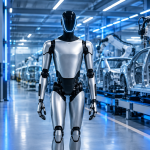
Tesla’s Optimus humanoid is on this list because it is the most-discussed robot in the world, not because it has earned the slot on deployments. Tesla showed Optimus Gen 2 in December 2023. At the “We, Robot” event in October 2024, Optimus units served drinks and chatted with guests. Multiple outlets, including Bloomberg, reported that the robots were remotely assisted by humans.
Elon Musk has repeatedly said Optimus will be worth more than the rest of Tesla, and his production targets have slipped more than once. Our “tesla optimus outlook” article covers why Musk now calls Optimus and Cybercab most of Tesla’s value and why there is still no proof of scale.
Shipped vs demo: Not for sale. Tesla says Optimus does work in its own factories, but it has not published independent data on what tasks, how many units or with what level of autonomy.
Humanoid makers compared
Humanoids get most of the attention, so here is a side-by-side of what each company has actually published. Where a spec is not public, we say so rather than guess.
| Robot | Company | Height | Weight | Payload | Price | Status |
|---|---|---|---|---|---|---|
| G1 | Unitree | 132 cm | 35 kg | Not stated for general use | From $16,000 | Shipping |
| Digit | Agility Robotics | 175 cm | 65 kg | 16 kg | RaaS, not public | Early commercial |
| Figure 02 | Figure AI | 167 cm | 70 kg | 20 kg | Not public | Pilots |
| Atlas (electric) | Boston Dynamics | Not published | Not published | Not published | Not for sale | Pre-commercial |
| Optimus | Tesla | Not officially published | Not officially published | Not published | Not for sale | Internal only |
The pattern is clear. The cheapest humanoid has the most units in the world, and the most valuable humanoid company has the fewest verified deployments. That gap will close one way or the other in the next few years.
Who actually owns the leading robotics companies
This is the angle most rankings skip. Many top robotics companies are subsidiaries, and that changes how they behave. A unit inside a carmaker or a chip-test firm answers to that parent’s strategy and budget.
| Company | Owner or status | Key deal | Year |
|---|---|---|---|
| ABB Robotics | SoftBank Group (pending) | $5.375 billion sale agreed | 2025 |
| Boston Dynamics | Hyundai Motor Group | Controlling stake, ~$1.1B valuation | 2021 |
| KUKA | Midea Group | Takeover, delisted 2022 | 2017 |
| Universal Robots | Teradyne | $285 million acquisition | 2015 |
| Mobile Industrial Robots | Teradyne | Acquisition | 2018 |
| Kiva Systems | Amazon | $775 million acquisition | 2012 |
| Figure AI | Private | Series C, $39B post-money | 2025 |
| Physical Intelligence | Private | $400M round, $2.4B valuation | 2024 |
| Unitree | IPO process, STAR Market | Listing application | 2025 |
Two things stand out. Asian industrial groups have bought heavily into Western robotics hardware: Hyundai, Midea and now SoftBank. And the highest valuations in the industry sit in private humanoid and robot-AI companies that have yet to report meaningful sales.
Rising robotics companies to watch
These did not make the ranked list because their deployments are early or narrow, but they are building critical pieces of where the industry is going.
Physical Intelligence. This San Francisco startup builds general-purpose robot foundation models. It released its π0 model in October 2024 and later open-sourced it. In November 2024 it raised $400 million at a $2.4 billion valuation, with backers including Jeff Bezos and OpenAI. It does not make hardware, which is the point: it wants its software to run on everyone else’s arms.
Eka Robotics. Our “eka robotics funding” coverage reports that Eka raised a $150 million Series A at a $1.45 billion valuation, per TechCrunch. A unicorn valuation at Series A tells you how much capital is chasing robot intelligence right now. It does not tell you yet whether the product works at scale.
GrayMatter Robotics. Based in the Los Angeles area, GrayMatter builds AI-driven robot cells for sanding, polishing and spraying, jobs that are dirty, repetitive and hard to staff. Its approach is to scan each part and generate the robot program automatically, which matters for high-mix shops that cannot afford a programmer for every new part.
Seoul Robotics. A Korean company known for lidar perception software. Its infrastructure-based approach puts sensors in the facility rather than on the vehicle, and it has used that to move cars autonomously through factory yards. It is a useful reminder that some robotics intelligence lives in the building, not the robot.
Labrador Systems. A California startup building the Retriever, an assistive home robot that carries items around the house for older adults and people with limited mobility. Home robots are a graveyard of failed products, so Labrador’s narrow focus on one useful job is the right bet even if the market is small.
What separates the leaders from the rest
After going through all 14, a few patterns explain the ranking better than any single spec.
Controllers and motors beat demos. FANUC and Yaskawa sit near the top because they own the full stack from servo motor to control software. That integration is why their robots run for a decade.
Recurring revenue is the real moat. Intuitive makes money every time a surgeon operates. Amazon saves money every time a robot moves a pod. Companies that sell a robot once and walk away have to win the next sale from scratch.
Narrow beats general, for now. Digit moves totes. Stretch unloads trucks. Spot inspects. The robots with the clearest jobs have the clearest customers. General-purpose humanoids have the biggest funding and the thinnest deployment records.
China is no longer optional. With more than half of global installations, any robotics company without a strong position in China is giving up the largest growth market. Unitree’s prices show what Chinese supply chains can do to hardware costs.
How to think about investing in robotics
We do not give stock tips, and nothing here is investment advice. What we can do is explain the structure of the market, because it trips up a lot of investors searching for robotics stocks.
The pure-play problem is real. You cannot buy shares in Boston Dynamics, KUKA or Universal Robots directly. They sit inside Hyundai, Midea and Teradyne, where robotics is a fraction of the business. ABB Robotics is heading into SoftBank. The listed companies where robotics is the main business, such as FANUC, Yaskawa, Intuitive and Symbotic, each carry very different risks.
Robotics exchange-traded funds exist, including the Global X Robotics & Artificial Intelligence ETF (ticker BOTZ) and the ROBO Global Robotics and Automation Index ETF (ticker ROBO). Read the holdings before assuming they are robot makers. Thematic funds often hold chip designers, software firms and industrial suppliers whose robotics exposure is indirect.
For newer listings, the filings matter more than the videos. Our “unitree valuation warning” piece is a good example: the company’s own prospectus tells you what it thinks the risks are. Legal disclosures are written by people who can be sued for getting them wrong. Promotional videos are not.
Engineer's note
When you read a robotics company’s annual report, find the revenue split between hardware, software and service. A rising service share usually means robots are staying in the field and being used. A flat one often means pilots are not converting.
Our verdict
FANUC is our top pick among the top robotics companies because it combines the largest commercial footprint, decades of reliability and a full in-house stack. Intuitive is the best robotics business by revenue model. ABB and Yaskawa round out the industrial core, and Amazon runs the largest robot fleet anyone has built.
The humanoid wave is real money and real engineering, but it is still mostly pilots. Unitree ships the most units, Agility has the clearest commercial contract, Figure has the biggest valuation, and Tesla has the loudest promises. We will move them up this list when the deployment data does.
FAQ
What is the biggest robotics company in the world?
It depends on the measure. By robotics revenue, Intuitive Surgical is among the largest, with about $8.35 billion in 2024. By industrial robot installed base, FANUC is widely regarded as the leader. Amazon runs the largest single fleet, having passed one million robots in 2025, but it does not sell them.
Which companies are the “Big Four” of industrial robotics?
FANUC, ABB, Yaskawa and KUKA. Together they have supplied a large share of the industrial robots installed in car plants and factories worldwide for decades, although Chinese suppliers have been gaining share rapidly in their home market.
Who makes the best humanoid robot right now?
There is no single answer because no humanoid has proven itself at fleet scale. Unitree sells the most affordable and widely available models, starting around $16,000 for the G1. Agility Robotics has the most concrete commercial contract with GXO. Figure AI and Boston Dynamics have the most advanced published demos, but both remain pre-scale.
Is Tesla a robotics company?
Tesla builds some of the most automated car factories in the world and is developing the Optimus humanoid, but Optimus is not for sale and Tesla has not published verified deployment data. We include it because of its influence on investor attention, not because it leads on shipped robots.
Which country has the most robots?
China. It installed 276,288 industrial robots in 2023, 51% of the global total, according to the IFR. South Korea has the highest robot density, with 1,012 robots per 10,000 manufacturing workers.
Are robotics companies a good investment?
We do not give investment advice. Many leading robotics companies are subsidiaries of larger groups, so pure-play exposure is limited, and several private robotics firms carry valuations well ahead of their current sales. Read filings, check what share of revenue actually comes from robots, and treat demo videos as marketing.
Keep reading
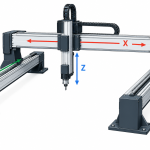
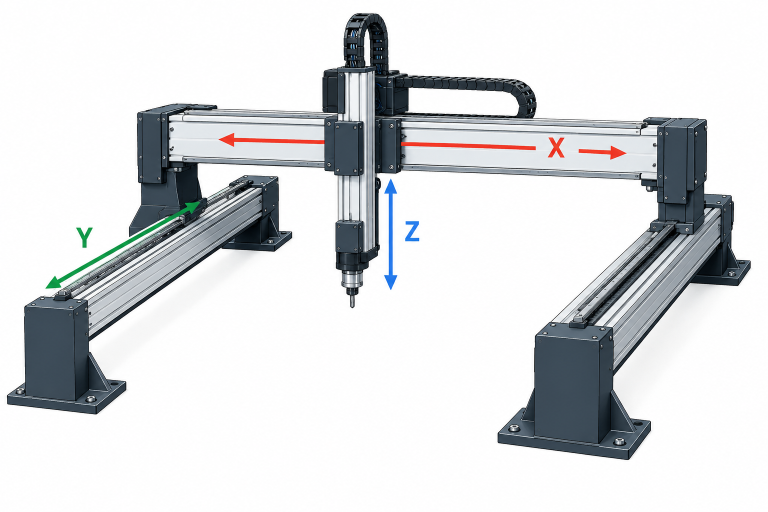 Industrial & Service RobotsCartesian robots and XYZ gantry systems explainedCartesian systems are robots that move a tool along three straight, perpendicular axes (X, Y and Z), so…Oct 21, 2026 · 4 min read
 Robotics NewsMusk calls Optimus and Cybercab most of Tesla’s value; no scale proof yetMusk says Optimus and Cybercab will be most of Tesla's value, but no independent deployment is verified. Here…Oct 21, 2026 · 4 min read
 Robotics NewsUnitree warns of valuation regression as its trailing P/E reaches 388xUnitree's Oct 20 filing shows a 388.25x trailing P/E versus a 39.51x industry average and warns of valuation…Oct 21, 2026 · 3 min read