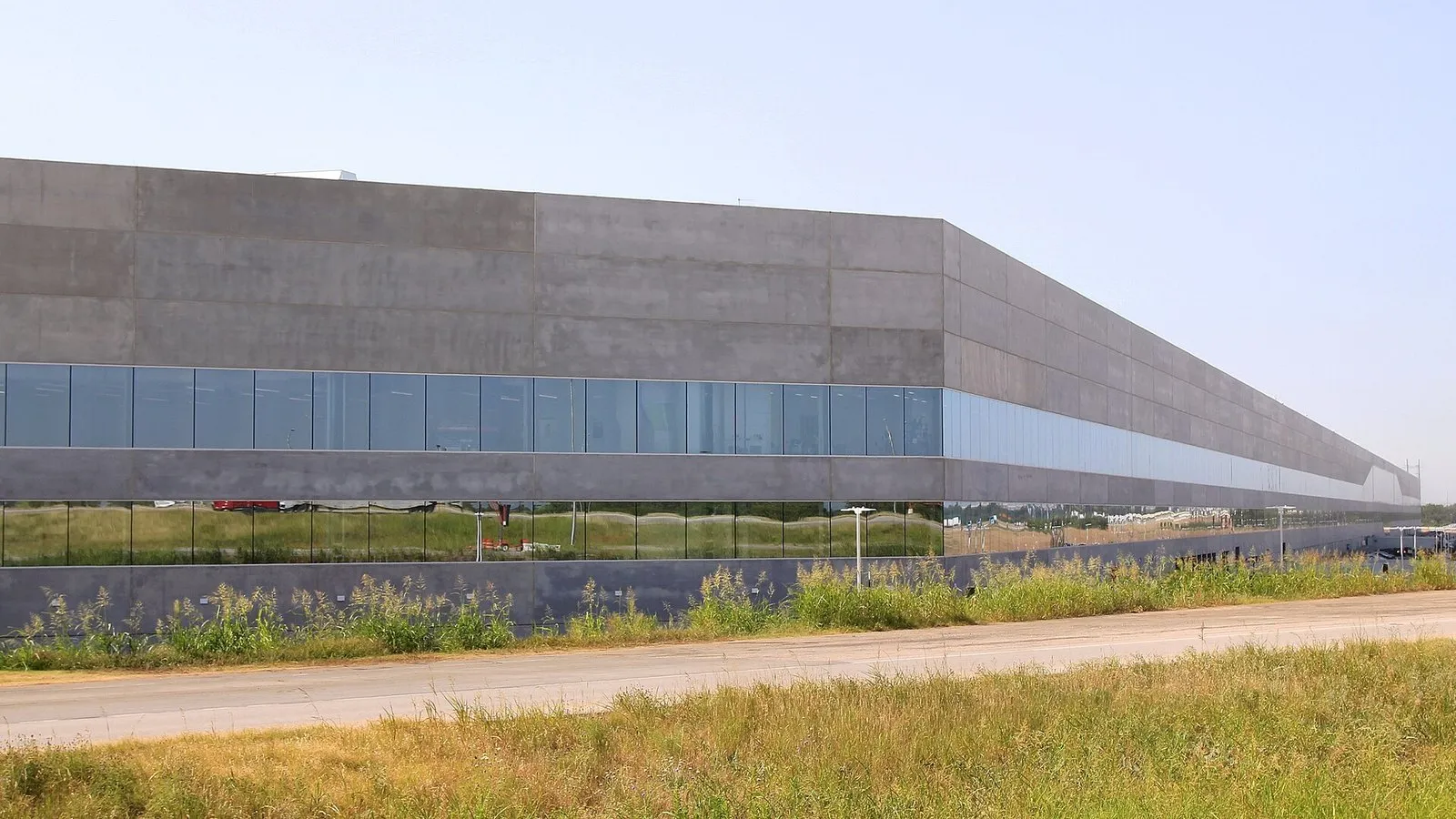
By RWT Robotics Editorial Team Published
CONFIRMED
Tesla has notified Germany’s Federal Cartel Office of a plan to acquire assets of EMAG, a machine-tool maker in Salach near Stuttgart, Reuters reports, as relayed by secondary outlets TeslAnt and FourWeekMBA. The filing lists no price and does not say which assets are covered. Several outlets tie the move to precision gear capacity for the Optimus humanoid robot, but neither company has confirmed that link.
What we know
The hard fact here is a regulatory document. According to Reuters, as relayed by TeslAnt and FourWeekMBA, Tesla notified Germany’s Federal Cartel Office (Bundeskartellamt) of a plan to acquire assets of EMAG. The case number is B5-132/26. The filing is dated 2026-11-23 and was publicly listed on 2026-11-27.
A caveat on sourcing: we could not open the original Reuters article. Everything attributed to Reuters here comes through those secondary outlets. Reuters is a strong source on a filing like this, but we are reading it secondhand.
What the filing does not contain matters as much as what it does. Reuters reports that it gives no price and does not specify which EMAG assets are involved. That could mean a production line, a product division, machinery, intellectual property, or something broader. The filing alone does not tell us.
A notification is also not a deal. In Germany, filing with the Bundeskartellamt opens a merger review. It does not mean the regulator has approved anything, and it does not mean the transaction has closed.
On the corporate side, Reuters reports that Tesla declined to comment and EMAG did not immediately reply. Neither company has publicly confirmed the deal, and neither has said anything about Optimus.
What Reuters does say about EMAG is specific: the company makes machines used to produce humanoid-robot drive systems. That single descriptive line is the factual hook for everything that follows in the speculation.
What is rumored
The most widespread claim is that Tesla wants EMAG assets to secure precision gear and parts capacity for Optimus production. Handelsblatt, TeslaNorth and Teslarati have all drawn that connection. These are credible outlets on the filing itself, but the Optimus motive is analyst and media inference. It rests on Reuters’ description of what EMAG’s machines are used for, combined with the obvious fact that Tesla is building a humanoid robot. Tesla has not said so. EMAG has not said so.
The inference is reasonable. It is still an inference. A machine-tool maker that serves humanoid-robot drive production could also serve plenty of other gear-heavy products, and a vague asset filing leaves room for several explanations.
A second, weaker claim comes from a single secondary outlet: that EMAG’s roughly 220 employees could transfer to Tesla and that the Salach site would stay operational. We rate this grade D. It is single-sourced, and neither company has commented. Treat it as unverified until someone with access to the deal terms confirms it.
What we don’t know yet
Almost everything that would let you judge this deal is missing.
We do not know the price. Without it, there is no way to say whether this is a small equipment purchase or a significant bet.
We do not know the scope. “Assets of EMAG” could describe a few gear-cutting lines or a large share of the business. That changes what Tesla would actually gain.
We do not know the purpose. The Optimus link is plausible but unconfirmed, and Tesla has given no statement.
We do not know the timeline. The review has only just opened, and there is no reported date for a decision.
We do not know what happens to EMAG’s people or plant. The 220-employee figure and the site claim come from one unconfirmed source.
What it means
The angle everyone wants answered is whether owning gear and parts supply brings Tesla closer to building humanoids at volume. Speaking as engineers: the logic is sound in principle, and unproven in this case.
Humanoid joints are actuator-dense. Every joint needs a motor, some form of reduction, and tight tolerances to move smoothly and repeatably. Precision gearing is the kind of component where supply, quality and cost can bottleneck a program long before software does. If you plan to build a lot of robots, controlling the machines that make the gears is one way to avoid waiting in someone else’s queue.
But owning machine tools is not the same as producing good gears at scale. You still need process know-how, metrology, trained operators and yield. Whether this deal transfers that capability depends on which assets are covered and whether the people come with them. Those are exactly the details we do not have.
There is a pattern worth watching. One secondary source, attributing the report to Reuters, says Tesla acquired manufacturing assets and about 300 employees from Germany’s Manz in 2025. We have not verified that. If accurate, it would suggest Tesla has a habit of buying German manufacturing capability outright rather than only contracting for it. An EMAG asset purchase would fit that pattern, but one unverified precedent is not a strategy.
On cost, the honest answer is that nobody outside the two companies knows. The filing lists no price.
Markets moved anyway. Tesla shares rose about 5% on 2026-11-27, according to Invezz. The outlet connects that rise to the EMAG news, but that link is unverified, and a single day’s share move says little about the deal itself.
Our read: a real filing, a plausible motive, and very little else. Watch for the Bundeskartellamt’s decision, any disclosure of asset scope, and a word from Tesla or EMAG. Until then, the Optimus connection stays in the rumor column.
Follow every development in one place on our humanoid robot tracker.
Keep reading
 Robotics NewsTesla’s first limited AI5 chips reportedly go to Optimus and data centersReports say Tesla's first AI5 chips go to Optimus and data centers. Musk backs that priority, but the…Nov 27, 2026 · 5 min read
 Robotics NewsCiti initiates Agility Robotics at Buy after shares fall about 52% since debutCiti started Agility Robotics at Buy, per CNBC, after a roughly 52% slide since its Nov 5 IPO.…Nov 25, 2026 · 4 min read
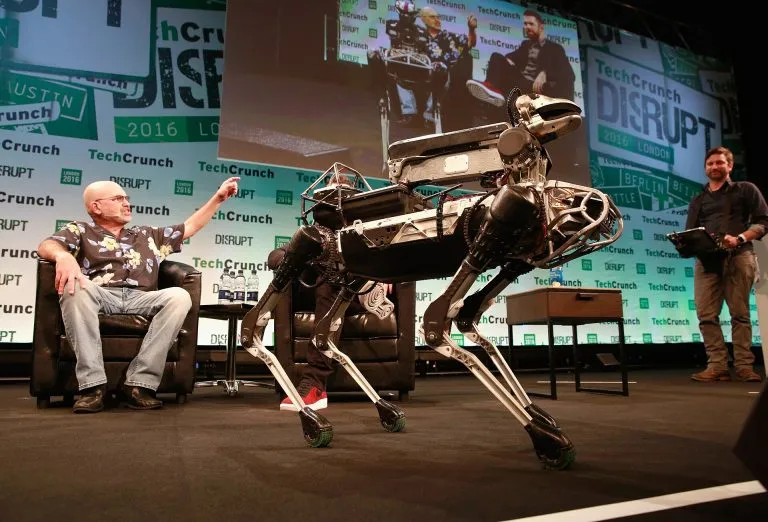 Robotics NewsSoftBank closes Raibert lab deal as Hyundai exits, The Robot Report saysThe Robot Report says SoftBank closed its purchase of Raibert's institute from Hyundai. Terms are undisclosed and SoftBank…Nov 24, 2026 · 5 min read
Credits and sources
By RWT Robotics Editorial Team
- Published