By RWT Robotics Editorial Team Checked against 8 sources Published
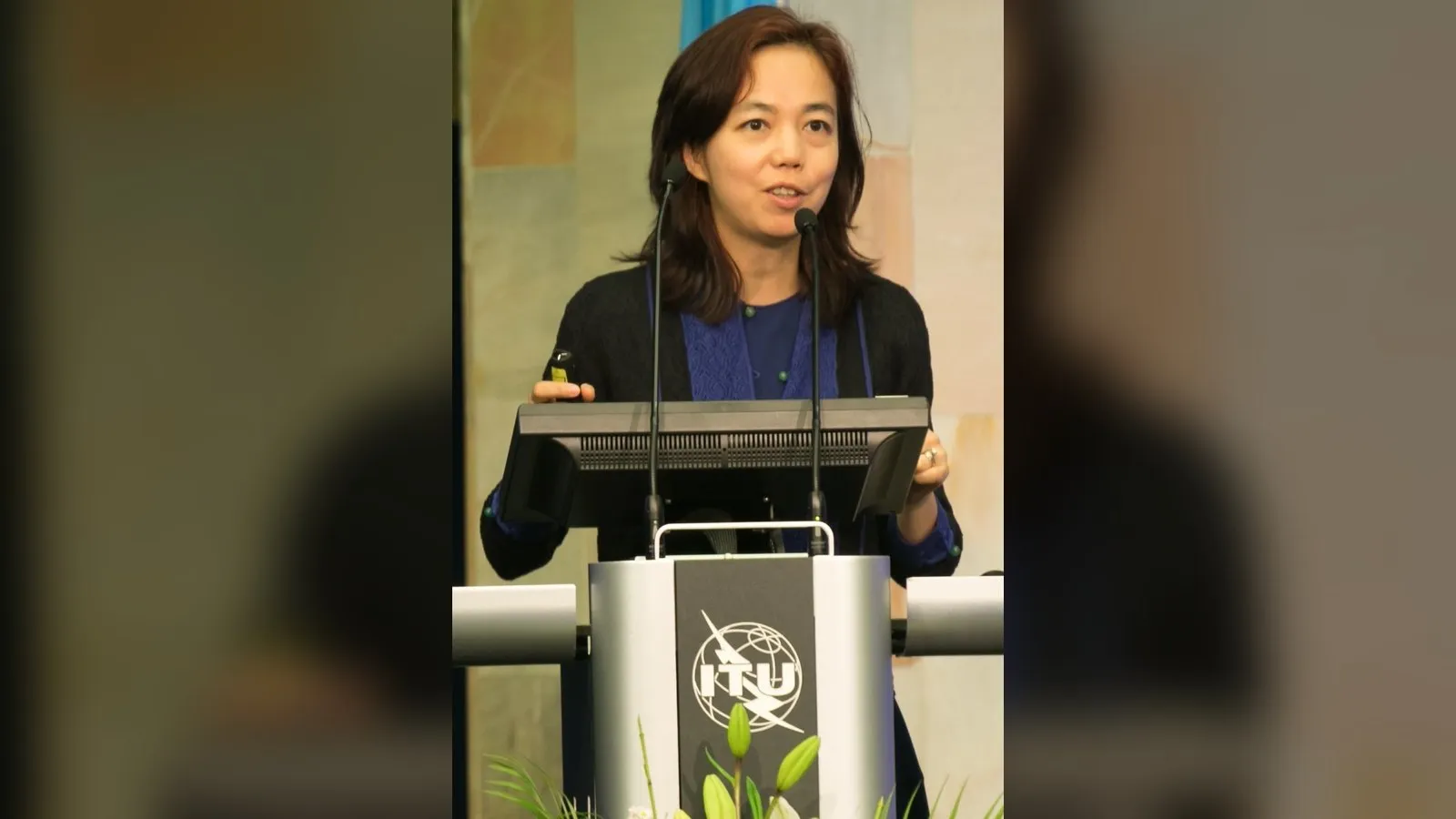
Fei-Fei Li built ImageNet, the labeled image dataset that set off the 2012 deep learning breakthrough in computer vision. She is a Stanford computer science professor and co-founder of the Stanford Institute for Human-Centered AI (HAI). Since November 2026 she has also been AMD’s Executive Vice President and Chief Scientist, after AMD bought her startup, World Labs.
The rundown
- ImageNet and its annual challenge set up the 2012 AlexNet result. That is where the “godmother of AI” nickname comes from.
- AMD closed its roughly $8.2B all-stock purchase of World Labs on Nov 13, 2026. Li now reports to Lisa Su.
- Her BEHAVIOR robotics benchmark shows how hard household tasks still are. The 2025 winner scored about 26%.
- She is still HAI’s founding director and senior fellow, and an AI advisor to Stanford’s president.
- No verified net worth figure exists. Her World Labs stake was never disclosed.
Fact-checked
We checked these key facts against the sources named, on November 27, 2026:
- She co-founded Stanford HAI in 2019 and World Labs in 2024 (source: hai.stanford.edu)
- The dataset paper appeared at CVPR in 2009, the year Li moved to Stanford (source: en.wikipedia.org)
- It went into limited beta in September 2025 and opened to everyone on November 12, 2025 (source: worldlabs.ai)
- In 2010 the team launched the ImageNet Large Scale Visual Recognition Challenge (ILSVRC) (source: image-net.org)
- AMD announced the all-stock deal on September 28, 2026, valued at about $8.2 billion at the time (source: ir.amd.com)
Fei-Fei Li at a glance (updated November 2026)
Fei-Fei Li is a computer scientist who gave AI its most influential benchmark. She now runs science at one of the world’s biggest chipmakers. Her career covers three acts: datasets (ImageNet), institutions (Stanford HAI) and world models (World Labs, now part of AMD).
Here are the quick facts:
| Item | Detail |
|---|---|
| Born | 1976, China |
| Moved to the US | At 15, to New Jersey |
| Education | Princeton BA in physics (1999); Caltech PhD in electrical engineering (2005) |
| Academic post | Professor of computer science, Stanford University |
| Best-known work | ImageNet and the ImageNet Large Scale Visual Recognition Challenge |
| Institutions founded | Stanford HAI (2019), AI4ALL nonprofit |
| Startup | World Labs, co-founded 2024, acquired by AMD in 2026 |
| Current company role | AMD Executive Vice President and Chief Scientist |
| Publications | 400+ scientific articles, per her Stanford profile |
| Spouse | Silvio Savarese |
| Children | Two |
| Book | The Worlds I See (Flatiron Books, Macmillan, 2023) |
Her papers appear under a different name from the one people search for. This trips up students all the time.
Engineer's note
Search Google Scholar or arXiv for “L. Fei-Fei”. That is the name on most of her papers, including the original ImageNet paper. A search for “Li” alone buries her work among thousands of other authors.
Why she’s called the ‘godmother of AI’
The nickname comes from ImageNet. It was a huge, carefully labeled image dataset paired with a yearly competition. In 2012 that competition gave deep neural networks their public breakthrough. Li bet that data, not only algorithms, was holding computer vision back. The bet paid off.
ImageNet and the ImageNet Challenge
ImageNet started in 2007, while Li was on the Princeton faculty. Princeton says she conceived the project there. The idea was simple and, at the time, unfashionable. Most vision research used small datasets with a few dozen object categories. Li wanted to map the visual world at the scale a child experiences it.
The team organized images using the WordNet hierarchy of English nouns. Crowd workers on Amazon Mechanical Turk then verified the labels. The result was millions of labeled images. The UK Engineering Council’s 2025 announcement describes ImageNet as providing “millions of labelled images for training and evaluating computer vision algorithms.” The dataset paper appeared at CVPR in 2009, the year Li moved to Stanford.
A dataset alone does not move a field. A shared scoreboard does. In 2010 the team launched the ImageNet Large Scale Visual Recognition Challenge (ILSVRC). It used a 1,000-category subset. Every lab trained on the same data and reported results on the same hidden test set. Progress became measurable, comparable and public.
In 2012 a University of Toronto entry called AlexNet won the challenge. Alex Krizhevsky, Ilya Sutskever and Geoffrey Hinton built it. It was a convolutional neural network trained on GPUs. Its top-5 error was about 15.3%. The next-best entry, built on hand-engineered features, scored about 26.2%. A gap that size ended the argument. Within a few years, nearly every serious vision system ran on deep learning.
This chain of events explains a lot about modern AI:
- A large, clean dataset made big neural networks trainable without overfitting.
- A public benchmark made results hard to fake or cherry-pick.
- GPUs made the training practical.
- The win spread the recipe to speech, language and, later, robotics.
Where the nickname comes from, and its limits
“Godmother of AI” is a media label, not a technical title. It pairs her with Geoffrey Hinton, Yoshua Bengio and Yann LeCun, often called the “godfathers” of deep learning. Li has said in interviews that she accepts the label because it puts a woman in a story usually told about men.
A common question in forums goes like this: is the nickname deserved, or did ImageNet just collect labels while others built the models? Both halves of that question have some truth.
What the nickname overstates:
- Li did not invent neural networks, backpropagation or convolutional networks.
- AlexNet was built in Toronto, not in her lab.
- AI has many parents. Hinton, Bengio, LeCun, John Hopfield and others did the core modeling work.
What it gets right:
- Building ImageNet was a research contribution in its own right. The design choices (WordNet structure, quality control, a held-out test set) were what made it trustworthy.
- The challenge created the shared measurement deep learning needed to prove itself.
- The judges of the 2025 Queen Elizabeth Prize for Engineering put her alongside Hinton, LeCun, Bengio, Hopfield, Bill Dally and Jensen Huang. That is a jury of engineers saying the dataset mattered as much as the models.
Did you know?
According to the QEPrize foundation and Stanford, Li was the only woman among the seven 2025 Queen Elizabeth Prize for Engineering laureates. King Charles III presented the prize at St James’s Palace on November 5, 2025.
From a dry-cleaning shop in New Jersey to Princeton and Caltech
Li was born in China in 1976. She came to the United States at 15, speaking almost no English. Her memoir describes a teenage life split between school and work. That included the dry-cleaning shop her family ran in New Jersey.
The memoir credits two forces with keeping her on track. One was a lifelong pull toward physics. The other was a high school math teacher who became a mentor and family friend. She earned a place at Princeton and graduated with a physics degree in 1999. She kept helping run the family business while studying.
At Caltech her interests moved from physics toward how brains see. Her doctoral work sat between computational vision and cognitive neuroscience. One of her topics was how quickly humans grasp the gist of a scene. She finished a PhD in electrical engineering in 2005. That background matters. ImageNet came from a scientist who thought about vision the way a neuroscientist does: as learning from vast amounts of experience, not from hand-written rules.
After Caltech she taught at the University of Illinois Urbana-Champaign, then at Princeton, where ImageNet began. In 2009 she moved to Stanford.
Career timeline
Li’s career runs from academic vision research to institution building, a stint at Google, a startup and now a chip company. The table puts the milestones in order.
| Year(s) | Role / milestone | Organization | Why it matters |
|---|---|---|---|
| 1999 | BA in physics | Princeton University | Physics training shaped her taste for big, unifying questions |
| 2005 | PhD in electrical engineering | Caltech | Vision science and neuroscience roots |
| 2007 | ImageNet project starts | Princeton University | The dataset behind modern computer vision |
| 2009 | ImageNet paper at CVPR; joins faculty | Stanford University | ImageNet moves to Stanford with her |
| 2010 | First ImageNet Challenge (ILSVRC) | ImageNet team | A shared benchmark for the whole field |
| 2012 | AlexNet wins ILSVRC | University of Toronto entry | The deep learning breakthrough moment |
| 2013–2018 | Director | Stanford Artificial Intelligence Lab (SAIL) | Led one of the oldest AI labs in the world |
| 2017 | AI4ALL launches as a national nonprofit | AI4ALL | Pathways into AI for underrepresented students |
| 2017–2018 | VP; Chief Scientist of AI/ML | Google Cloud | Saw enterprise AI from the inside |
| 2019 | Co-founds HAI with John Etchemendy | Stanford HAI | “Human-centered AI” as an institution |
| 2021 | Member, NAIRR Task Force | White House OSTP and NSF | Pushed for public AI compute |
| 2022 | BEHAVIOR-1K published at CoRL | Stanford Vision and Learning Lab | ImageNet-style benchmark for robots |
| 2023 | The Worlds I See published; Senate testimony | Flatiron Books; US Senate | Public voice on AI policy |
| 2024 | World Labs comes out of stealth | World Labs | Bet on spatial intelligence |
| 2025 | Marble launches; QEPrize; TIME Person of the Year | World Labs; QEPrize; TIME | Product, plus peak public recognition |
| May 2026 | Special Advisor on AI to President Levin | Stanford University | University-wide AI role after HAI restructuring |
| Nov 2026 | EVP and Chief Scientist | AMD | World Labs absorbed into AMD |
Stanford AI Lab and HAI
At Stanford, Li ran the Stanford Artificial Intelligence Lab (SAIL) from 2013 to 2018. Her own group, the Stanford Vision and Learning Lab, moved from image recognition into video, scene understanding, healthcare sensing and robot learning. She also helped create CS231n, Stanford’s deep learning course for computer vision. It became one of the most widely watched AI courses online.
In 2019 she co-founded the Stanford Institute for Human-Centered AI with philosopher and former provost John Etchemendy. HAI’s thesis is that AI should augment people rather than replace them. It funds work across law, medicine, economics and engineering. HAI also publishes the annual AI Index report, which many journalists and policymakers use as a reference.
The Google Cloud years
From 2017 to 2018, while on sabbatical from Stanford, Li was a Vice President at Google and Chief Scientist of AI/ML at Google Cloud. The job was about bringing machine learning to business customers through cloud products. She went back to Stanford full-time and co-founded HAI soon after. That move fit her stated view that universities and the public sector need a stronger voice in AI.
Policy work: Senate testimony, NAIRR and AI4ALL
Li’s policy work has a consistent theme: public access to AI resources, and more diverse people building AI.
- House testimony, June 26, 2018. She spoke to the House Science Committee about AI and described her work with AI4ALL.
- Senate testimony, September 14, 2023. She testified to the Senate Homeland Security and Governmental Affairs Committee on governing AI through government procurement. She argued for demystifying AI, protecting privacy and fairness, and investing heavily in public AI research.
- NAIRR Task Force, 2021. The White House Office of Science and Technology Policy and the National Science Foundation named her one of 12 members of the task force on a National AI Research Resource. The idea is shared national compute and data for academic researchers who can’t match the budgets of big tech companies.
- AI4ALL. She co-founded this nonprofit, which grew out of a Stanford summer program, to bring high school students from underrepresented groups, particularly girls and women, into AI.
Fei-Fei Li and robotics: BEHAVIOR and robot learning
Li’s main robotics contribution follows the ImageNet playbook: build the benchmark first. BEHAVIOR-1K defines 1,000 household activities in simulation. The 2025 BEHAVIOR Challenge then showed that the best teams in the world complete only about a quarter of the task requirements. That number is the most honest snapshot available of where household AI robots stand.
BEHAVIOR-1K: ImageNet for embodied AI?
BEHAVIOR-1K was published at the Conference on Robot Learning (CoRL) in 2022, with Li as a co-author. It is a benchmark for embodied AI: agents that perceive and act in physical spaces, not just label photos.
The design has three parts:
- Tasks chosen by people, not researchers. The 1,000 activities came from a survey asking “what do you want robots to do for you?”
- Rich, interactive scenes. More than 50 interactive 3D scenes, such as homes, gardens, offices and shops.
- Lots of objects with physical properties. More than 10,000 objects, annotated with properties that matter to robots (whether something can be cut, cooked, folded or soaked, for example).
Each task has a formal goal definition, so success can be checked by software. That is what lets BEHAVIOR work as a benchmark and not just a demo environment. The simulator behind it, OmniGibson, is built on NVIDIA’s Omniverse platform.
Did you know?
According to the BEHAVIOR-1K paper (CoRL 2022), the benchmark’s 1,000 activities came from a survey asking people “what do you want robots to do for you?” That survey is why the list leans toward cleaning and tidying rather than lab-style pick-and-place.
Compare that with how most manipulation research gets judged. A lab picks a handful of tasks, records a video and reports a success rate on its own setup. BEHAVIOR does for robotics what ImageNet did for vision. It replaces “trust our video” with a shared task list and a scoreboard. If you work with a robotic arm on household tasks, that shift is the point.
What the BEHAVIOR Challenge scores actually tell us
The 2025 BEHAVIOR Challenge was the first large public test of the benchmark. Results were announced at NeurIPS in San Diego on December 6–7, 2025.
| Item | Value | Source / period |
|---|---|---|
| Activities in BEHAVIOR-1K | 1,000 | CoRL 2022 paper |
| Interactive scenes | 50+ | CoRL 2022 paper |
| Annotated objects | 10,000+ | CoRL 2022 paper |
| Tasks in the 2025 challenge | 50 full-length household tasks | Challenge site, 2025 |
| Teleoperated demonstrations provided | 10,000 | Challenge site, 2025 |
| Hours of demonstration data | 1,200+ | Challenge site, 2025 |
| Teams that submitted | 18 | Challenge site, 2025 |
| First place q-score | About 26% across all 50 tasks | Winning team’s arXiv report, Dec 2025 |
| Second place (team Comet) test q-score | 0.2514 | arXiv 2512.10071, Dec 2025 |
| Comet post-challenge validation q-score | 0.3453 (not a ranking score) | arXiv 2512.10071, Dec 2025 |
| Prize money | $1,000 / $500 / $300 | Challenge site, 2025 |
The q-score is a success measure that gives partial credit for meeting some of a task’s goal conditions. A 26% q-score does not mean the robot finished 26% of tasks outright. Full completions are rarer than that.
The first-place team’s report says it built on Pi0.5, a vision-language-action model from Physical Intelligence. Team Comet also built on the openpi codebase and finished a close second. So the best policies of late 2025 were large pretrained models, fine-tuned on more than 1,200 hours of demonstrations, and they still met only about a quarter of the goal conditions. And this was in simulation, where sensors are perfect and nothing breaks.
What this means for you:
- Treat household humanoid demos with care. Ask whether a demo was autonomous or teleoperated, and whether it was one task or many.
- Long tasks are the hard part. Each of the 50 tasks chains many steps. Small errors add up.
- Data alone hasn’t solved this yet. 10,000 demonstrations is a lot for robotics. It is tiny next to the web-scale data that language models train on.
Engineer's note
If you train manipulation policies, download BEHAVIOR-1K and the 2025 challenge baselines from behavior.stanford.edu. Benchmark your policy against the published q-scores, around 0.25 for the top teams, before you claim progress on household tasks.
The 2025 results are archived on the challenge site, which also hosts the current edition. Expect scores to rise. The interesting question is how fast, and whether gains carry over to real robots.
Why simulation and world models matter for robot training
Real-world robot data is slow and expensive to collect. Every demonstration needs hardware, a human operator and a reset. Simulation scales better, but someone has to build every kitchen, every drawer and every mug by hand. That bottleneck connects her robotics work to World Labs.
Her argument goes like this. If a model can generate realistic, varied 3D environments on demand, robot training stops waiting on artists building scenes. BEHAVIOR shows what to measure. World models could supply the worlds to train in. You could call it ImageNet for embodied AI: first the benchmark, then the data engine.
World Labs and spatial intelligence
World Labs builds generative models that create and simulate interactive 3D environments, and it also works on technology for robotic learning and simulation. Li calls the target capability “spatial intelligence.” By that she means an AI’s ability to perceive, reason about, build and act within 3D space, not just describe images in words.
Li co-founded the company in 2024 with Justin Johnson, Christoph Lassner and Ben Mildenhall. Johnson was her former PhD student and co-taught CS231n. Mildenhall co-created NeRF (neural radiance fields), a key technique for rebuilding 3D scenes from photos.
So is “spatial intelligence” just a new name for 3D computer vision? Partly. The skills underneath, like depth estimation, 3D reconstruction and scene understanding, are old research areas. What is new is the claim that one generative foundation model can do all of them at once and produce whole worlds, the way large language models absorbed many separate language tasks. The pitch is new. The real test is whether a single model beats specialized pipelines.
Marble and the World API: what they output
Marble is World Labs’ multimodal world model. It went into limited beta in September 2025 and opened to everyone on November 12, 2025. It generates persistent, downloadable 3D worlds from text, images, video or rough 3D layouts.
“Persistent” is the key word for engineers. Many world models generate video frames on the fly. When the camera moves on, the scene is gone. Marble produces a 3D asset you can export, reload and walk through again. The November 2025 launch also included:
- Chisel, an editing tool that lets you block out a scene’s structure in 3D and then let the model fill in the visual style.
- Marble Labs, a space for showing workflows and use cases in games, film, design and robotics.
The World API launched publicly on January 23, 2026. It gives developers programmatic access to world generation, so a training pipeline can request environments in code instead of through a web interface.
In April 2026 World Labs released Marble 1.1, with better lighting and contrast and fewer visual artifacts. Marble 1.1 Plus expands 3D coverage automatically, for larger environments. Reports give the release date as either April 2 or April 8.
Can Marble worlds be used for robot simulation, or are they just pretty Gaussian splats? The honest answer is: as starting points, yes. As finished simulation environments, not yet.
- Gaussian splats are great for appearance: photorealistic views for training camera-based perception.
- Physics simulation needs collision geometry, articulated parts (doors, drawers) and material properties like mass and friction.
- A generated kitchen can look right while its cabinet doors are fused to the frame.
Engineer's note
Treat Marble worlds as quick environment drafts. Before using one for sim-to-real training, check the collision geometry, scale and any articulated objects in your simulator. Add physics properties by hand where the model can’t infer them.
How does this compare with Google’s Genie or NVIDIA Cosmos? The approaches differ in kind:
| System | Maker | Main output | Robotics angle |
|---|---|---|---|
| Marble / World API | World Labs (now AMD) | Persistent, exportable 3D worlds | Environment generation for simulation |
| Genie 3 | Google DeepMind | Interactive frames generated in real time | Agent training inside a generated world |
| Cosmos | NVIDIA | World foundation models for video generation and prediction | Synthetic data and policy evaluation for physical AI |
In short: Marble makes 3D assets you can keep. Genie generates the world frame by frame as an agent moves. Cosmos focuses on video-based synthetic data for physical AI, tied closely to NVIDIA’s simulation stack.
Funding history: confirmed vs. reported
World Labs funding coverage mixes confirmed rounds with rumors. This table keeps them apart.
| Date | Event | Figure | Status |
|---|---|---|---|
| Sept 2024 | Comes out of stealth | $230M raised at about a $1B valuation | Confirmed |
| Sept 2025 | Marble limited beta | — | Confirmed |
| Nov 12, 2025 | Marble public launch, with Chisel and Marble Labs | — | Confirmed |
| Jan 23, 2026 | World API public launch | — | Confirmed |
| Jan 23, 2026 | Bloomberg: talks to raise up to $500M | $5B valuation | Reported |
| Feb 2026 | Financing round announced | $1B, valuation not disclosed | Confirmed |
| Apr 2026 | Marble 1.1 and Marble 1.1 Plus | — | Confirmed |
| Sept 28, 2026 | AMD announces acquisition | About $8.2B, all-stock | Confirmed |
| Nov 13, 2026 | Deal closes, per SEC 8-K/A | 14,978,322 AMD shares issued | Confirmed |
| Nov 16, 2026 | AMD announces completion | Li named EVP and Chief Scientist | Confirmed |
Investors in the 2024 round included Andreessen Horowitz, NEA and Radical Ventures. The $5B figure appeared in a Bloomberg report about talks. World Labs never confirmed it, and its February 2026 announcement of a $1B round gave no valuation.
The skeptic’s view
The world-model thesis is plausible but not proven. Here is what remains open.
- Physics, not just pixels. Generated worlds look convincing. Nobody has published evidence that they reproduce contact, friction and deformation well enough for policies to transfer to real robots.
- Benchmarks favor other approaches so far. The 2025 BEHAVIOR leaders used vision-language-action models trained on teleoperated data, not generated worlds.
- Commercial demand is mostly creative. Early Marble use cases leaned toward games, film and design. Robotics use is still at the experiment stage.
- Competition is heavy. Google DeepMind and NVIDIA have more compute and their own simulation ecosystems.
Reality check
No public study yet shows robot policies trained mainly in Marble-generated worlds beating policies trained in hand-built simulators or on real data. Until one does, “spatial intelligence for robots” is a research direction, not a shipped capability.
The AMD acquisition: what happened and what it means
AMD bought World Labs in an all-stock deal valued at about $8.2 billion when it was announced on September 28, 2026. The deal closed November 13, and AMD announced the completion on November 16. Fei-Fei Li became AMD’s Executive Vice President and Chief Scientist, reporting directly to CEO Lisa Su.
Deal terms in plain numbers
- Announced: September 28, 2026
- Closed: November 13, 2026, per an SEC 8-K/A filing
- Announced by AMD: November 16, 2026, in an official press release
- Structure: All-stock
- Value at announcement: About $8.2 billion
- Shares issued: 14,978,322 shares of AMD common stock to former World Labs stockholders
- Rank: AMD’s second-largest acquisition, after Xilinx
Because AMD paid in stock, the dollar value moves with AMD’s share price. The $8.2B figure is the value at announcement, not a fixed cash sum.
Did you know?
According to coverage of AMD’s SEC filing reported by Yahoo Finance, AMD issued 14,978,322 shares of common stock to former World Labs stockholders. That made World Labs AMD’s second-largest acquisition, after Xilinx.
Her role at AMD
AMD’s leadership page lists Li as Executive Vice President and Chief Scientist. She reports to Lisa Su, not to a product division. That reporting line suggests the job is company-wide research direction, not running one business unit.
Why would a chip company buy a world-model startup? Three reasons stand out from the deal’s framing and AMD’s position in the market:
- Workload pull. Generating and simulating 3D worlds takes enormous GPU compute, for both training and inference. Owning a leading world-model team means AMD’s hardware and software get tuned for that workload first.
- Physical AI positioning. NVIDIA has built a strong story around robotics simulation with Omniverse, Isaac and Cosmos. World Labs gives AMD a credible answer in the same space.
- Talent and credibility. Hiring the creator of ImageNet as chief scientist signals that AMD wants to set research direction, not only supply chips.
For robotics teams, this could eventually mean simulation and world-generation tools tuned for AMD Instinct GPUs and the ROCm software stack. That is a plausible direction, not an announced product roadmap. If you follow the largest robotics companies and their suppliers, watch whether AMD starts releasing robotics simulation tools.
What happens to Marble and the World Labs team
According to AMD’s announcement and coverage by citybiz, the World Labs team continues its foundation-model research alongside AMD engineers. Neither AMD nor World Labs has published detailed product plans for Marble or the World API since the deal closed. If you depend on them, keep an eye on AMD’s and World Labs’ release notes for any changes to pricing, access or terms.
Is she still at Stanford?
Yes. Stanford still lists her as a professor. In May 2026, before the AMD deal, Stanford restructured HAI, merging its AI and data science efforts into a single institute. The combined institute kept the HAI name and is led by computer scientist James Landay. Li kept the titles of HAI founding director and senior fellow. She also took on a new university-wide role as Special Advisor on AI to Stanford President Jonathan Levin. That role covers research, partnerships, education and student careers across all seven Stanford schools.
She and former Stanford president John Hennessy co-chair the institute’s advisory council. John Etchemendy, her HAI co-founder, continues as a senior fellow and advisor. Levin called the new HAI “the front door for AI at Stanford.”
What has not been officially stated: since the AMD deal closed, neither Stanford nor AMD has said how her time is split. They also haven’t said whether she will teach a course like CS231n or keep running a research group day to day. Senior industry roles alongside Stanford appointments are common; she did the same during her Google Cloud years. The details of this arrangement are not public.
‘The Worlds I See’: her book
The Worlds I See: Curiosity, Exploration, and Discovery at the Dawn of AI is Li’s memoir. Flatiron Books, a Macmillan imprint, published it on November 7, 2023, as part of Melinda French Gates’s Moment of Lift Books line. The hardcover runs 336 pages.
Li calls it a “science memoir,” and the book weaves two stories together:
- The immigrant story. Leaving China at 15, learning English, working in the family business, caring for a sick parent and finding mentors.
- The ImageNet story. Why she believed data was the missing piece, how the dataset was built with little support at first, and what the 2012 result felt like from inside.
It ends with her case for human-centered AI and the founding of HAI. The book appeared on Barack Obama’s list of recommended reading on AI and was a Financial Times Best Book of 2023.
Is it worth reading if you already know the ImageNet story? Yes, if you care about how research actually happens: funding rejections, skeptical reviewers and the craft of building a dataset. Skip it if you want technical depth. It contains no math and does not cover World Labs or AMD, which came later.
Engineer's note
Read The Worlds I See for the ImageNet backstory. For current titles and dates, use her Stanford profile and AMD’s leadership page. The book stops before World Labs existed.
Husband, children and family
Fei-Fei Li is married to Silvio Savarese, also a computer vision and robotics researcher. They have two children. She keeps her family life private, and this profile reports only what is public.
Savarese has his own career at Stanford, where he led the Computational Vision and Geometry Lab and worked on 3D vision and robot perception. He later became Executive Vice President and Chief Scientist at Salesforce, leading Salesforce AI Research. So both spouses now hold chief scientist titles at large US tech companies.
In the memoir, Li writes about family mostly in terms of her parents and her mother’s long illness, which shaped her interest in AI for healthcare. She does not share her children’s names or details in public, and responsible coverage should respect that.
Fei-Fei Li’s net worth: what’s actually known
No verified figure exists for Fei-Fei Li’s net worth. Any number you see online is a guess. No filing or official source discloses her personal stake in World Labs, her AMD compensation or her other assets.
Here is what is known, as context only:
- AMD issued 14,978,322 shares to former World Labs stockholders combined. That total covers all founders, employees and investors, including firms like Andreessen Horowitz, NEA and Radical Ventures. How it was split has not been made public.
- World Labs raised at least $230M in 2024 and $1B in 2026 from outside investors. Those investors own large stakes, which reduces each founder’s share.
- Her AMD pay package as an executive officer may appear in future AMD proxy filings. Until then, any salary figure is speculation.
Sites that post a precise “Fei-Fei Li net worth” usually skip all of this. They often take the deal value and assign her an arbitrary percentage. Be skeptical of those numbers.
Awards and honors
Li’s honors span engineering, medicine and public recognition. These are the major ones, not her full CV.
| Year | Honor | Awarding body |
|---|---|---|
| 2019 | Best paper award, robotics research (ICRA 2019) | IEEE International Conference on Robotics and Automation |
| 2020 | Elected member | National Academy of Engineering |
| 2020 | Elected member | National Academy of Medicine |
| 2021 | Elected fellow | American Academy of Arts and Sciences |
| 2023 | TIME100 Most Influential People in AI | TIME |
| 2025 | Queen Elizabeth Prize for Engineering (shared with six others) | Queen Elizabeth Prize for Engineering Foundation |
| 2025 | Honorary Doctorate | Yale University |
| 2025 | Person of the Year, one of eight “architects of AI” on the cover | TIME |
The QEPrize stands out among these. It is engineering’s equivalent of a lifetime achievement award, and it honored ImageNet as infrastructure on the same level as GPUs and neural network theory.
FAQ
Who is Fei-Fei Li?
She is a Chinese-born American computer scientist and Stanford professor who created ImageNet. She co-founded Stanford HAI in 2019 and World Labs in 2024. Since November 2026 she has been AMD’s Executive Vice President and Chief Scientist.
Why is Fei-Fei Li called the godmother of AI?
Because ImageNet and its annual challenge set up the 2012 AlexNet result that launched modern deep learning. The label credits her data-and-benchmark contribution. It does not mean she invented neural networks.
What is World Labs?
World Labs is a company Li co-founded in 2024 that builds generative “world models.” Its main products are Marble, which creates persistent 3D worlds from text, images, video or layouts, and the World API for developers. It also works on technology for robot learning and simulation.
Did AMD buy World Labs, and for how much?
Yes. AMD announced the all-stock deal on September 28, 2026, valued at about $8.2 billion at the time. It closed November 13, 2026, with 14,978,322 AMD shares issued to former World Labs stockholders. It is AMD’s second-largest acquisition, after Xilinx.
What is Fei-Fei Li’s role at AMD?
She is Executive Vice President and Chief Scientist, reporting directly to CEO Lisa Su. The World Labs team continues its foundation-model research alongside AMD engineers.
Is Fei-Fei Li still a professor at Stanford?
Yes. After Stanford’s May 2026 restructuring she kept her titles as HAI founding director and senior fellow, and became Special Advisor on AI to President Jonathan Levin. How her time is now split with AMD has not been officially announced.
Who is Fei-Fei Li’s husband?
Silvio Savarese, a computer vision and robotics researcher. He was a Stanford professor and is now Executive Vice President and Chief Scientist at Salesforce.
Does Fei-Fei Li have children?
Yes, she has two children. She keeps them out of public view and does not share their details.
What is Fei-Fei Li’s book about?
The Worlds I See (Flatiron Books, 2023) is a science memoir. It tells her immigrant story alongside the history of ImageNet and her case for human-centered AI.
What is Fei-Fei Li’s net worth?
No one knows for sure. Her World Labs stake and AMD pay have not been disclosed. The AMD shares went to all former World Labs stockholders combined, so online estimates are guesses.
How is World Labs different from Google’s Genie or NVIDIA Cosmos?
Marble produces persistent 3D worlds you can export and reuse. Genie generates interactive frames in real time. Cosmos focuses on video-based world models for synthetic data in physical AI.
Where her work goes next
The ImageNet lesson is that an honest benchmark moves a field further than a demo does. Li’s own BEHAVIOR Challenge shows that household robotics is still at about 26% on that kind of benchmark. Her new job at AMD is a large bet that generated worlds can raise that score. The best way to judge the bet is to watch BEHAVIOR leaderboards and published sim-to-real results over the next two years, not product launch events. If world-model-trained policies start winning those benchmarks, spatial intelligence will have earned its billing.
Keep reading
 Humanoid RobotsSimulate First, Buy Later: Testing Robots Before Spending MoneyRobot simulators and browser tools let you try ideas for free, and the try-before-you-pay habit is useful far…Nov 21, 2026 · 2 min read
 Humanoid RobotsUnitree Robotics Company Profile and Product LineupUnitree Robotics is the Hangzhou company behind the Go2 robot dog and the G1 humanoid. By its own…Nov 18, 2026 · 24 min read
 Humanoid RobotsAI Robots Explained and How Artificial Intelligence Drives ThemThe International Federation of Robotics estimates that about 7,000 full-size humanoid robots were sold for commercial use worldwide…Nov 9, 2026 · 20 min read
Credits and sources
By RWT Robotics Editorial Team
- Facts were checked against the sources below before publication.
- Published
Checking and sources
- Researched from 8 sources, listed below.
- Facts are checked against those sources; anything we cannot confirm is corrected, labelled or removed.
Sources (8)
- AMD Completes Acquisition of World Labs (GlobeNewswire) (globenewswire.com)
- AMD Completes Acquisition of World Labs (AMD Investor Relations) (ir.amd.com)
- AMD finalizes $8.2 billion World Labs acquisition, adds 'godmother of AI' as EVP and chief scientist (finance.yahoo.com)
- AMD Completes World Labs Acquisition, Names Fei-Fei Li Chief Scientist (citybiz.co)
- AMD Leadership: Fei-Fei Li (amd.com)
- Fei-Fei Li's AI Startup World Labs in Funding Talks at $5 Billion Valuation (bloomberg.com)
- Fei-Fei Li's World Labs reportedly raising funding at $5B valuation (siliconangle.com)
- Marble: A Multimodal World Model (World Labs) (worldlabs.ai)