DEMO ONLY
Unitree founder Wang Xingxing now expects humanoids to complete 80% of assigned factory or home tasks from verbal orders as soon as 2028, Bloomberg reports. That pulls forward the 2-to-10-year window he gave in August, and it arrives alongside talk of a “self-evolving” system in which AI writes and tests robot control code. Right now there is a founder’s prediction, an internal trial and some demos, with no independent proof that robots can handle these tasks on their own.
What we know
Bloomberg reported on Oct 23 that Wang, 36, expects humanoids to hit the 80% mark as soon as 2028. Bloomberg says Wang defines that threshold himself as an arbitrary “aha” moment for practical robot applications. It calls the new timeline a reversal from his earlier view that mainstream robots could take as long as a decade.
That earlier view is on record. At the World Robot Conference in Beijing in August, Wang defined the humanoid “ChatGPT moment” as a robot placed in an unfamiliar home completing about 80% of tasks via voice or text. Per CNBC’s translation of his Mandarin speech, he said it could come in 2-3 years if things move fast, or 5-10 years if slowly. Bloomberg’s Aug 20 report summarized it as 2 to 10 years.
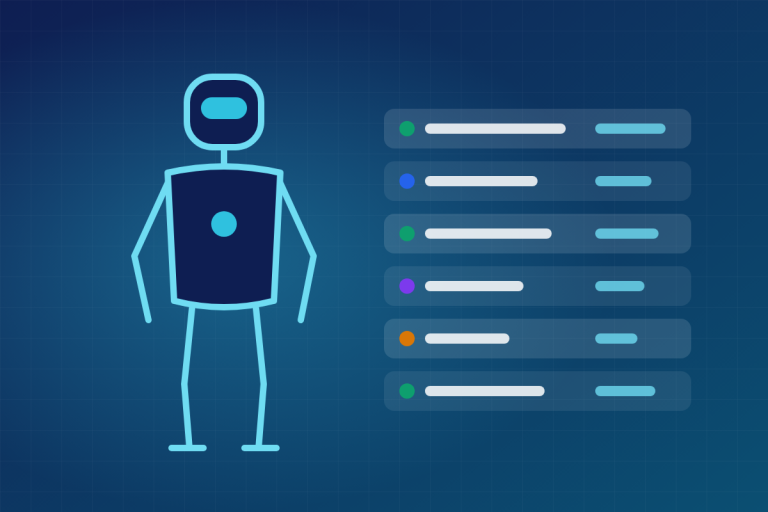
In that same speech, CNBC reports, Wang said Unitree robots are less efficient than human workers and must be retrained from scratch for each new task. He also described a “self-evolving development loop”: AI models write and test control code, each round is scored, and results feed the next version. The bottleneck, he said, is precision, because robots fail at “the last few centimeters or millimeters.”
The Standard HK reports that at the China International Industry Fair in Shanghai, Wang said Unitree is trialling an internal pipeline combining coding, training, deployment, testing and feedback, and that he expects next year’s GPT-7 to break current bottlenecks.
Two popular framings do not hold up. Bloomberg’s wording is “as soon as 2028,” not “by 2028,” and SCMP says Wang called 2028 the more realistic estimate for room tidying, with 2027 the earliest. On self-improvement, SCMP, CNBC and The Standard HK all describe the system as in development or trialled internally, with humans still checking motion and task performance.
What is rumored
Chinese tech and finance aggregators 36Kr, ChainCatcher and BigGo Finance (grade C, established outlets reporting from the live event, though translations vary) report that at Unitree’s Oct 22 World Physical AI Conference in Hangzhou, Wang gave a timeline of 1-2 years if all goes well and 2-3 years otherwise. They say his near-term target is robots tidying rooms in ordinary homes on voice command by the end of this year or next. We found no first-party transcript confirming the exact “1-3 years” wording.
TipRanks, a financial aggregator (grade C) citing Bloomberg and a Unitree transcript, reports that Wang credited GPT-6 for the faster timeline and that Unitree plans to scale annual output from tens of thousands to tens of millions of machines. We could not verify the output figure.
Thinnest of all: event write-ups from KuCoin, ChainCatcher and BigGo (grade D, single-source secondary aggregators) say a GPT-6-driven Unitree robot painted, washed its brushes, switched colors after seeing a palette and placed Go stones “autonomously” and “without any training.” The no-training claim is Unitree’s own. No approved outlet has verified autonomy, whether the demo was live or edited, or a success rate.
What we don’t know yet
How the 80% is measured. The “ChatGPT moment” is Wang’s informal benchmark, and no independent benchmark has been cited. Which tasks count, in which homes, over how many attempts?
What the self-evolving loop has produced. No independent test results are published, and we do not know how much human checking each iteration needs.
Whether recent demos are autonomous. Separately, Interesting Engineering notes Unitree has not said whether its Oct 21 H2-X “guardian” promo video showed autonomous or choreographed actions.
What it means
This is a conditional target, set against a benchmark the forecaster defined, backed by a system still in internal trials. Two months ago Wang himself said his robots need retraining for every new task and miss by millimeters. Since then the public evidence for faster progress has been demos without disclosure about autonomy, editing or teleoperation.
Using AI to generate, test and score control code is a reasonable engineering direction. Scoring is the hard part: grading a grasp in simulation is easy, grading the last millimeter in a stranger’s kitchen is not.
Wang is not alone. Galbot founder Wang He, a different person, expects a similar milestone by 2028, Reuters reported. Shared optimism is not shared evidence. What would move us: published success rates in unseen homes, unedited footage and third-party testing.
Follow every development in one place on our humanoid robot tracker.
Keep reading
 Robotics NewsAgility Robotics standardizes Digit 5 on Nvidia Thor, opens Pittsburgh centerAgility Robotics will use Nvidia IGX Thor in Digit 5 and is opening a Pittsburgh hub. Scale and…Oct 22, 2026 · 3 min read
 Robotics NewsMusk calls Optimus and Cybercab most of Tesla’s value; no scale proof yetMusk says Optimus and Cybercab will be most of Tesla's value, but no independent deployment is verified. Here…Oct 21, 2026 · 4 min read
 Robotics NewsUnitree warns of valuation regression as its trailing P/E reaches 388xUnitree's Oct 20 filing shows a 388.25x trailing P/E versus a 39.51x industry average and warns of valuation…Oct 21, 2026 · 3 min read