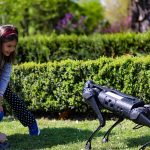

Robotics is the engineering discipline that designs, builds and programs machines that sense their surroundings, decide what to do and then physically act on the world. A robot is the machine that comes out of that work: sensors, a computer and motors working together in a loop so it can carry out tasks with little or no human help. This guide covers how that loop works, the main types of robots, what they can actually do today, and where the hype outruns reality.
What counts as a robot?
Engineers argue about the edges, but a working definition holds up well. A machine is a robot when it has three things: sensors that measure the world, a controller that makes decisions from those measurements, and actuators that move something. A dishwasher fails that test because it runs a fixed timer. A Roomba passes because it senses walls and dirt and changes its path in response.
The word itself is older than the machines. Czech writer Karel Čapek introduced “robot” in his 1920 play R.U.R., borrowing from robota, meaning forced labour. Isaac Asimov coined “robotics” in his 1941 short story “Liar!”. The first industrial robot, Unimate, went to work on a General Motors line in 1961, lifting hot die-cast metal parts. That job set the pattern for the next 60 years: robots took the dull, dirty and dangerous work first.
When people search “robotics robot” or “robot robotics”, they usually want both halves explained: the field and the machine. Keep the distinction in mind. Robotics is the discipline that draws on mechanical, electrical and software engineering. The robot is the product.
How robots actually work: the sense, think, act loop
Every functional robot, from a warehouse cart to a surgical arm, runs some version of the same cycle many times per second.
Sense
Sensors turn physical reality into numbers. The common ones:
- Encoders on each motor report joint angle or wheel rotation. These are the most important sensors on almost any robot, and the least glamorous.
- IMUs (inertial measurement units) combine accelerometers and gyroscopes to track orientation and acceleration. Legged robots depend on them to stay upright.
- Lidar fires laser pulses and measures their return time to build a 2D or 3D map of distances.
- Cameras, including stereo and depth cameras, feed computer vision for recognising parts, people and obstacles.
- Force/torque sensors at the wrist or in the joints let a robot feel contact, which matters for assembly, polishing and safe work beside people.
Think
The controller takes sensor data and decides what each motor should do next. This happens at several layers. At the bottom, low-level control loops (often PID controllers) run at hundreds or thousands of hertz to hold a joint at a target angle. Above that, motion planning works out a collision-free path. At the top, task logic or AI decides the goal: pick that box, go to dock 4, stop because a person walked in.
Kinematics is the maths that connects these layers. Forward kinematics answers “if my joints are at these angles, where is my gripper?” Inverse kinematics answers the harder question: “to put my gripper here, what angles do I need?” A six-axis arm can often reach the same point in several joint configurations, so the solver has to pick one.
Here is the core idea stripped to a few lines. Real controllers add filtering, limits and safety checks, but the shape is the same:
# Minimal PID loop holding one joint at a target angle
kp, ki, kd = 2.0, 0.1, 0.05
integral, prev_error = 0.0, 0.0 while running:
    angle = encoder.read()            # sense
    error = target - angle            # think
    integral += error * dt
    derivative = (error - prev_error) / dt
    command = kp*error + ki*integral + kd*derivative
    motor.set_torque(command)         # act
    prev_error = error
    sleep(dt)
Engineer's note
Those inner loops usually run on microcontrollers with hard timing deadlines, which is why embedded robot firmware avoids dynamic memory allocation. The way the heap works in C makes allocation time unpredictable, and a late motor command can mean a crashed arm.
Act
Actuators turn the controller’s decisions into motion. Most modern robots use electric motors: brushless DC motors paired with gearboxes such as harmonic drives (compact, near-zero backlash) or planetary gears. Hydraulics still win where you need huge force in a small package, which is why the original Boston Dynamics Atlas used them. Pneumatics power cheap, fast grippers and soft robots. At the end of an arm sits the end effector: a gripper, suction cup, welding torch, screwdriver or paint gun, swapped to suit the job.
The software that ties it together
Most research robots and a growing share of commercial ones run on ROS 2, an open-source middleware that handles communication between sensors, planners and motor drivers. The current long-term support release is Jazzy Jalisco (May 2024, supported to 2029), and Kilted Kaiju followed in May 2025. If you want to understand why so many teams have standardised on it, see our explainer on what ROS 2 is and why more robots are moving to it.
The main types of robots
Robots are built around the job. The shape that suits welding a car body is useless for carrying groceries upstairs.
| Type | Typical axes / mobility | Common jobs | Example products |
|---|---|---|---|
| Articulated arm | 6 rotary joints | Welding, painting, machine tending | FANUC, ABB, KUKA arms |
| SCARA | 4 axes | Fast pick-and-place, small assembly | Epson, Yamaha SCARA lines |
| Cartesian / gantry | 3 linear axes (X, Y, Z) | CNC loading, 3D printing, palletising | Gantry systems from many integrators |
| Delta | 3 to 4 axes, parallel links | Food and pharma packaging at high speed | ABB FlexPicker |
| Collaborative arm (cobot) | 6 to 7 joints | Light assembly beside people | Universal Robots e-Series, UR20 |
| Autonomous mobile robot | Wheeled | Warehouse transport | Locus, MiR, Amazon drives |
| Legged robot | Four legs | Inspection, site surveys | Boston Dynamics Spot |
| Humanoid | Two legs, two arms | Tote moving, pilot deployments | Agility Digit, Unitree G1 |
| Surgical robot | Teleoperated arms | Minimally invasive surgery | Intuitive da Vinci |
Cartesian machines are the simplest to reason about because each axis moves in a straight line, which is why so many first robots in small shops look like a frame with a moving carriage. We break them down in our guide to Cartesian robots and XYZ gantry systems. Legged robots get more attention than their deployment numbers justify, but four-legged inspection robots have found real paying work; our piece on robot dogs and what modern models can do covers the current field.
Industrial robots: where most robots really live
Strip away the viral videos and the picture is clear: the vast majority of the world’s robots are industrial arms bolted to factory floors. They weld, paint, palletise and tend machines in automotive, electronics, metal and plastics plants, running repetitive tasks around the clock.
According to the International Federation of Robotics’ World Robotics 2024 report, about 4,281,585 industrial robots were operating in factories worldwide in 2023, up 10% on the year before. Installations that year reached 541,302 units, the third year in a row above half a million. The IFR’s 2025 report put 2024 installs at a similar level, around 542,000 units.
| Country | New industrial robots installed, 2023 | Share of global installs |
|---|---|---|
| China | 276,288 | 51% |
| Japan | 46,106 | 9% |
| United States | 37,587 | 7% |
| South Korea | 31,444 | 6% |
| Germany | 28,355 | 5% |
Source: IFR World Robotics 2024.
Raw installs reward big economies. Robot density, meaning robots per 10,000 manufacturing employees, shows how automated a country’s production really is.
| Country | Robots per 10,000 manufacturing workers, 2023 |
|---|---|
| South Korea | 1,012 |
| Singapore | 770 |
| China | 470 |
| Germany | 429 |
| Japan | 419 |
| Global average | 162 |
Source: IFR World Robotics 2024.
China passing Germany and Japan on density is the big story here. It shows how fast Chinese manufacturers have automated, and it explains why so much of the hardware supply chain, from servo motors to complete humanoids, now comes out of China.
Collaborative robots: robots that work beside people
Traditional industrial arms are fast, strong and dangerous, so they live inside fenced cells. Collaborative robots, or cobots, flip that trade-off. They move slower, carry less, and use power and force limiting to stop when they hit something, so many applications can run without fencing after a risk assessment. Danish company Universal Robots sold the first commercial cobot in 2008 and remains the best-known name.
A cobot fits a small or mid-size manufacturer that can’t justify a full automation cell. You can bolt one next to a CNC machine, teach it by dragging the arm through the motion, and have it loading parts within days. Here are the main models in the Universal Robots lineup:
| Model | Payload | Reach | Typical use |
|---|---|---|---|
| UR3e | 3 kg | 500 mm | Benchtop assembly, screwdriving |
| UR5e | 5 kg | 850 mm | Machine tending, light pick-and-place |
| UR10e | 12.5 kg | 1,300 mm | Packaging, palletising |
| UR16e | 16 kg | 900 mm | Heavy tooling, multi-part handling |
| UR20 | 20 kg | 1,750 mm | Palletising, welding |
| UR30 | 30 kg | 1,300 mm | Heavy machine tending, screwdriving |
All of these are six-joint arms. The e-Series models carry built-in force/torque sensing at the tool flange, which is what lets them do jobs like polishing and part insertion that need a sense of touch.
Reality check
“Collaborative” describes a capability, not a guarantee. The standards behind it, ISO 10218 and ISO/TS 15066, still require a risk assessment of the whole application. A cobot holding a knife is not safe just because the arm is.
Safety rules aren’t the only checklist. Networked robots are also IT assets, and industrial security, meaning segmented networks, patched controllers and no default passwords, is now part of any serious deployment.
Service robots and humanoids
Service robots work outside traditional manufacturing: warehouses, hospitals, farms, homes and public spaces. The biggest commercial success here is the least photogenic. Wheeled autonomous mobile robots move shelves and totes in fulfilment centres by the hundreds of thousands, with Amazon alone reporting well over a million robots across its operations.
Other service robots with real, paying deployments:
- Robot vacuums. iRobot launched the Roomba in 2002, and home floor cleaners remain the most common robot most people own.
- Surgical systems. Intuitive’s da Vinci, cleared by the FDA in 2000, is teleoperated. The surgeon controls every motion, so the robot extends human skill rather than replacing it.
- Inspection robots. Boston Dynamics’ Spot walks industrial sites reading gauges and capturing thermal images, often on scheduled autonomous routes.
Humanoids are where the money and attention are flowing now. Agility Robotics’ Digit stands about 175 cm and moves totes in logistics pilots, including a commercial deal with GXO. Unitree sells its G1, a 1.32 m humanoid, from $16,000, mostly to research and education buyers. Tesla, Figure, Apptronik and Boston Dynamics, with its all-electric Atlas, are all chasing the same factory and warehouse jobs. Our roundup of the top robotics companies leading the industry today tracks who is shipping and who is still showing slides.
Be precise about what humanoid videos show. Ask three questions of every demo: was it autonomous or teleoperated, was it sped up, and was it one good take out of fifty? Companies don’t always say. A troupe of humanoids dancing in sync is impressive choreography, but it is scripted motion playback, not proof of useful work. Our coverage of the 110 humanoid robots that set a Guinness dance record looks at exactly that gap, and the same scepticism applies to funding headlines like Eka Robotics’ $150M Series A at a $1.45B valuation. Money signals belief, not capability.
Robotics research platforms and education
A lot of robotics progress starts on small, cheap hardware in university labs. Research platforms give scientists a known, repeatable body to test new control and learning methods on. Examples range from Unitree’s quadrupeds and humanoids, which are popular in reinforcement learning labs, to small aerial platforms like Flapper Drones’ Nimble+, a flapping-wing drone used to study insect-style flight.
In education, robotics kits teach programming, electronics and mechanics in one hands-on package. Students who start there often move into the field through mechanical engineering, computer science or the route we cover in electrical engineering as a path into robotics. Robotics needs all three disciplines, and the best engineers can read a schematic, a CAD model and a stack trace.
What robots still can’t do well
Robots are superb in structured environments: the same part, the same position, the same lighting, every time. They struggle the moment the world gets messy. The hard open problems are:
- Dexterous manipulation. Folding laundry, handling soft or tangled objects, and using human tools remain far harder for robots than walking or lifting.
- Generalisation. A robot trained to pick one SKU often fails on the next. Large “foundation models” for robotics aim to fix this, but robust generalisation in real factories isn’t proven at scale.
- Reliability and cost. A demo that works 90% of the time is a failed product. Factories expect uptime well above 99%, and a humanoid has to beat a human or a cheaper specialised machine on cost per task.
- Battery life. Mobile robots and humanoids typically run only a few hours per charge, which limits shift coverage unless they swap batteries or dock often.
This is why so much of the industry keeps choosing purpose-built machines over general-purpose ones. A $30,000 cobot or a gantry that does one task perfectly usually beats a humanoid that does many tasks unreliably.
How to get started with robotics
If you want to learn robotics hands-on, the path is well worn:
- Learn Python and basic C or C++. Most robot software uses one or both.
- Build something small with a microcontroller, a couple of servos and a distance sensor. Closing your first control loop teaches more than any lecture.
- Install ROS 2 Jazzy on Ubuntu 24.04 and work through the official tutorials using the TurtleSim simulator.
- Move to a simulated robot in Gazebo, then to real hardware like a low-cost robot arm or wheeled kit.
If you’re a manufacturer evaluating automation, start the other way round: pick one repetitive, well-defined task, measure its current cost and cycle time, and ask an integrator whether a cobot or a simple Cartesian system can do it. The best first robot project is boring and pays back in under two years.
FAQ
What is the simplest definition of robotics?
Robotics is the branch of engineering that designs, builds and programs robots: machines that sense their environment, make decisions and physically act. It combines mechanical engineering, electronics and software.
What is a functional robot?
A functional robot is one that does a real job reliably, as opposed to a concept or prototype. Practically, it means the full system works together: sensors, controller, actuators, power and safety, in the actual environment it was designed for.
What are the three main parts of a robot?
Sensors to perceive, a controller to decide, and actuators to move. Almost every robot also needs a power source, a physical structure and an end effector such as a gripper or tool.
Are robots and AI the same thing?
No. AI is software that makes decisions or recognises patterns, while a robot is a physical machine. Many robots use little or no AI and simply follow programmed paths. Modern robots increasingly use AI for perception and planning, but the motor control underneath is still classical engineering.
How many robots are there in the world?
The IFR counted about 4.28 million industrial robots operating in factories in 2023. That excludes service robots such as warehouse carts, robot vacuums and surgical systems, which add millions more.
Which country uses the most robots?
China installs the most by far, with about 51% of global industrial robot installations in 2023. South Korea has the highest robot density, at 1,012 robots per 10,000 manufacturing workers.
Keep reading
 Industrial & Service RobotsCartesian robots and XYZ gantry systems explainedCartesian systems are robots that move a tool along three straight, perpendicular axes (X, Y and Z), so…Oct 21, 2026 · 4 min read
 Robotics News110 humanoid robots set Guinness dance record, but ‘deployment’ is undefinedA 110-robot humanoid dance set a Guinness record in China. Organizers eye large-scale deployment, but choreography says little…Oct 25, 2026 · 3 min read
 Robotics NewsMicroduck somersault was a GTC Berlin demo; 20,000 preorder figure is self-reportedThe Microduck somersault was a GTC Berlin demo. The 20,000 preorder figure is self-reported, and the robot is…Oct 25, 2026 · 4 min read