CONFIRMED
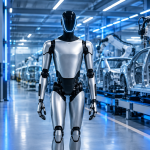
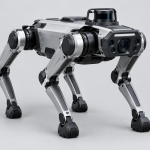
Unitree has filed an abnormal-trading announcement putting its trailing P/E at 388.25x, roughly ten times its industry average. In the same filing, the humanoid maker warned that if large-scale deployment disappoints, its revenue, earnings and valuation could all come down. A company cautioning investors about the hype around its own stock is rare enough to deserve a close read.
What we know
On Oct 20, 2026, Unitree (688836.SH) issued an abnormal-trading announcement. According to the company filing, as relayed by BigGo Finance, its closing-price gains over three consecutive sessions (Oct 16, 19 and 20) deviated cumulatively by more than 30%, meeting the STAR Market’s criteria for unusual trading. A caveat on sourcing: we have seen this filing only through secondary relays, not through the exchange text or a major outlet.
That deviation is not the same as a 30% price jump. Under Shanghai Stock Exchange abnormal-trading rules, the measure is cumulative deviation of closing-price gains, which a China AI Dispatch Substack briefing describes as a rise “above the index.” The raw price gain over those three sessions is unverified. So is the “40 billion yuan added in three sessions” figure in a BigGo headline. We found no official or major-outlet source for it.
The filing puts Unitree’s trailing P/E at 388.25x as of Oct 20, per relays from KuCoin (citing IT Home) and BigGo Finance. The one-month average for general equipment manufacturing, according to China Securities Index Co., is 39.51x.
Unitree also said, as reported by Cailian Press via PANews and TechFlow, that the humanoid industry remains in early commercialization. It cited uncertainty over technological maturity, downstream demand cultivation and supply-chain support. This is a warning about the industry’s prospects and about Unitree’s own valuation, not a blanket claim that the whole sector is overvalued.
The company said its review, including checks with its controlling shareholder and actual controller, found normal operations with no material changes and no undisclosed major information. Directors, senior executives and the controlling shareholder did not trade the stock during the period.
What we don’t know yet
The filing does not answer the question a 388x multiple raises: what business sits underneath it. The available reporting includes no unit sales figures and no breakdown of humanoids versus quadrupeds. We also lack current-year revenue, so we cannot say how much of the multiple reflects actual sales growth.
What we do have is thin. Per its IPO prospectus, as reported by NBC News, Unitree had $250M in revenue the prior year, about 13% of it from the U.S. Reuters reported, in a summary by PiQ Markets, that first-quarter adjusted net profit fell 53% to 40 million yuan. That is a secondary relay, so treat it with some care.
We also don’t know how the August 2026 U.S. regulatory restrictions reported by AI Business will affect that U.S. revenue share. The restrictions prevent future foreign-produced humanoid and quadruped robots from obtaining the approvals needed for U.S. sale, though existing approved models can still be sold.
What it means
Context matters here. This is a rebound, not a first surge. Unitree listed on the STAR Market on Aug 19, 2026 at 150.80 yuan, a valuation of about $9B. Reuters (via BusinessDay) and NBC News reported it opened at 1,100 yuan, a 629% jump from the IPO price, and closed up about 460% at 845 yuan, with the retail offering oversubscribed more than 8,000 times. BigGo reported an IPO P/E of 219.23x and a debut-day opening that implied a trailing multiple above 800x.
Then came the slide. Reuters reported shares down about 45% from the peak by Aug 25, with about $30B wiped from a valuation that had reached $66B. Bloomberg reported on Sep 2 that the stock sat more than 50% below its intraday high.
Here is the engineer’s read. A multiple near ten times the sector average, on falling first-quarter profit, is a bet on deployment volumes nobody has demonstrated yet. Unitree is saying so in its own filing. When the company writes “valuation regression” in an official document, investors should take the phrase at face value.
Follow every development in one place on our humanoid robot tracker.
Keep reading
 Robotics NewsMusk calls Optimus and Cybercab most of Tesla’s value; no scale proof yetMusk says Optimus and Cybercab will be most of Tesla's value, but no independent deployment is verified. Here…Oct 21, 2026 · 4 min read
 Robotics NewsEka Robotics raises $150M Series A at $1.45B valuation, per TechCrunchEka raised $150M, reportedly at $1.45B. Force sensing is the pitch, but pilots and company-stated figures are not…Oct 21, 2026 · 3 min read
 Robotics CompaniesTop robotics companies leading the industry todayMost lists of robotics companies mix shipping industrial giants with startups that have only posted a video. We…Oct 21, 2026 · 20 min read