By RWT Robotics Editorial Team Checked against 8 sources Published
Intuitive Surgical booked about $10.06 billion in 2025, which makes it the biggest company that earns its revenue from robots. ABB and Epson lead industrial robot market share, and Unitree and AgiBot ship more humanoids than anyone else. The answer to “largest” changes with the measure, so this page ranks the field four ways using current data from the IFR, company filings and investor releases.
Last updated: November 14, 2026.
Key takeaways
- No single company is “the largest”. Revenue, market share, units and valuation each give a different leader.
- Intuitive Surgical is the largest robotics pure-play by revenue, with about $10.06 billion in FY2025. ABB Robotics and Symbotic follow at about $2.3 billion each.
- ABB Robotics is still owned by ABB: China blocked the SoftBank purchase on November 5, 2026, and the deal has not closed.
- China installed about 59% of the world’s new industrial robots in 2025, and Chinese firms lead humanoid shipments. Lists that leave out Chinese makers are out of date.
- iRobot is no longer publicly traded, and Boston Dynamics never had its own ticker.
Fact-checked
We checked these key facts against the sources named, on November 14, 2026:
- It opened NEO pre-orders on October 28, 2025, at $20,000 or $499 a month, with deliveries planned for 2026 (source: robotics247.com)
- The Robot Report noted that about 73.6% of Unitree’s humanoid revenue came from research and education buyers, and only about 9% from industrial applications (source: therobotreport.com)
- By revenue from robots, Intuitive Surgical is the largest, with about $10.06 billion in 2025, followed by ABB Robotics and Symbotic at about $2.3 billion each (source: investor.intuitivesurgical.com)
- Its revenue for the first nine months of FY2026 reached about $2.03 billion, against $1.63 billion a year earlier, and it guided fourth-quarter revenue of $760 million to $780 million (source: sec.gov)
- Fanuc is the largest company focused on factory automation, with record net sales of ¥857.8 billion in the fiscal year to March 31, 2026, roughly $5.5 to $5.7 billion depending on the exchange rate (source: fanuc.co.jp)
The largest robotics companies in 2026: the short answer
Measured by revenue from robots, Intuitive Surgical is the largest robotics company in the world. ABB and Epson tie for the top of industrial robot market share. Unitree and AgiBot lead humanoid shipments, and Figure AI has the highest private valuation. Each leader wins on a different yardstick, which is why lists that rank on one number disagree.
| Metric | Leader | Figure | Period | Source |
|---|---|---|---|---|
| Robotics revenue (pure-play) | Intuitive Surgical | About $10.06B, up 21% | FY2025 | Intuitive preliminary results |
| Industrial robot share by value | ABB and Epson (tied) | About 13% each | 2023 | Statista Market Insights |
| Factory automation revenue | FANUC | ¥857.8B net sales, a record | FY to March 31, 2026 | Fanuc results |
| Mobile robots deployed | Amazon Robotics | More than 1 million robots | 2025 | Amazon |
| Humanoid units shipped | AgiBot (Omdia) / Unitree (self-reported) | 5,168 / more than 5,500 | 2025 | Omdia; Unitree STAR Market prospectus |
| Private valuation | Figure AI | $39B post-money | Series C, September 2025 | Company funding round |
The leaders differ because the companies run different businesses. Intuitive sells high-value surgical systems and earns recurring revenue from instruments. Fanuc sells CNC controls as well as robots. Unitree and AgiBot sell large numbers of fairly cheap machines, much of it to research and education buyers. Figure’s valuation is a bet on future sales, since it has not disclosed any revenue yet.
Top robotics companies by robot revenue
Counting only revenue that comes from robots, Intuitive Surgical is first by a factor of four. ABB Robotics and Symbotic sit close together at about $2.3 billion each, and Yaskawa’s robotics segment comes next. Companies that do not report robot sales separately from much bigger businesses are listed below the table, not given a guessed rank.
| Rank | Company | Robot revenue | Period | Basis |
|---|---|---|---|---|
| 1 | Intuitive Surgical | About $10.06B | FY2025 | Whole company (surgical robotics) |
| 2 to 3 (close) | ABB Robotics | About $2.3B | 2025 | Division, now reported by ABB as discontinued operations |
| 2 to 3 (close) | Symbotic | About $2.25B | FY to September 2025 | Whole company (warehouse automation) |
| 4 | Yaskawa Robotics segment | ¥119.2B (about $0.8B) in six months | H1 FY2025, to August 31, 2025 | Segment; full year roughly double (estimate) |
| 5 to 6 (close) | Teradyne Robotics | $89M in the quarter | Q4 2025 | Segment (Universal Robots, MiR) |
| 5 to 6 (close) | UBTech Robotics | RMB 2.01B (about $280M) | 2025 | Whole company; humanoids 41.1% of sales |
| 7 | Unitree Robotics | RMB 1.70B (about $235M) | 2025 | Whole company |
Symbotic’s order will change soon. Its revenue for the first nine months of FY2026 reached about $2.03 billion, against $1.63 billion a year earlier, and it guided fourth-quarter revenue of $760 million to $780 million. Adding those gives a full year of roughly $2.8 billion, which would put it clearly ahead of ABB Robotics’ 2025 figure. That total is arithmetic on company guidance, not a reported number.
Several big robot makers are left out of the numbered rows because their published headline figures mix robots with other businesses:
- Fanuc: robots are one of three segments inside ¥857.8 billion of group sales, alongside CNC and Robomachines. Robot sales grew 25.5% year on year in January to March 2026.
- KUKA: its sales sit inside Midea Group, an appliance maker.
- Epson, Kawasaki and Denso: each robot business is a small part of a printer, heavy-industry or auto-parts group.
- Amazon Robotics: builds robots for Amazon’s own warehouses and sells none externally.
- Zebra, Rockwell Automation and Hyundai (Boston Dynamics): none breaks out robot revenue.
What “largest” means, and why most lists get it wrong
A ranking of robotics companies only works if it counts robot business, not group size or hype. The pages that rank for this search mostly skip that step. They mix industrial arm makers with RPA software vendors, startups and conglomerates on one undifferentiated list.
Revenue vs market share vs units
These three measures answer different questions. Revenue shows how much money a company earns from robots. Market share by value shows its slice of a defined segment, such as industrial arms. Units show how many machines actually ship.
The measures can point in opposite directions. Epson’s 13% share of industrial robots comes mainly from small SCARA and six-axis arms, which cost much less per unit than a 500 kg KUKA or ABB arm for automotive body shops. A vendor of small arms can lead on units and trail on value. The reverse is also true.
Share estimates also come from market models, not audited company accounts. Statista’s 2022 chart gave ABB about 21% by value, while its 2023 data puts ABB at about 13%. The two years use different methods, so a jump like that tells you more about the method than about the business.
Humanoid unit counts have the same problem. Omdia, an independent analyst firm, ranks AgiBot first for 2025 with 5,168 humanoids out of 13,318 shipped worldwide. Unitree reports more than 5,500 humanoids for 2025 in its own prospectus. One number is an analyst estimate and the other a company disclosure, so neither cancels the other out.
Conglomerates with robot divisions
Seiko Epson, Denso, Kawasaki Heavy Industries and Amazon are much bigger than their robot businesses. Epson is mostly printers. Denso is a Toyota group auto-parts giant. Kawasaki builds motorcycles, ships, aircraft parts and rail cars. Amazon is a retailer and cloud provider that builds robots almost entirely for its own warehouses.
A list that ranks Amazon or Denso by group revenue is ranking the wrong thing. In this article, those companies count only for their robot business.
Engineer's note
Before you accept any claim that a company is “the largest”, check whether the ranking uses robot segment revenue or group revenue. Epson, Denso, Kawasaki and Amazon are many times bigger than their robot divisions.
Valuation is not size
A valuation measures what investors expect a company to become. It says nothing about how many robots the company ships today. Figure AI’s $39 billion mark from September 2025 is still its latest confirmed valuation, and it is far above that of most public industrial robot makers. Yet Figure has disclosed no revenue and said it had delivered more than 350 Figure 03 robots as of April 2026. Unitree went public at about a quarter of Figure’s valuation with RMB 1.70 billion in 2025 revenue and thousands of robots shipped. In this ranking, units and revenue count first.
Industrial robot makers ranked by market share
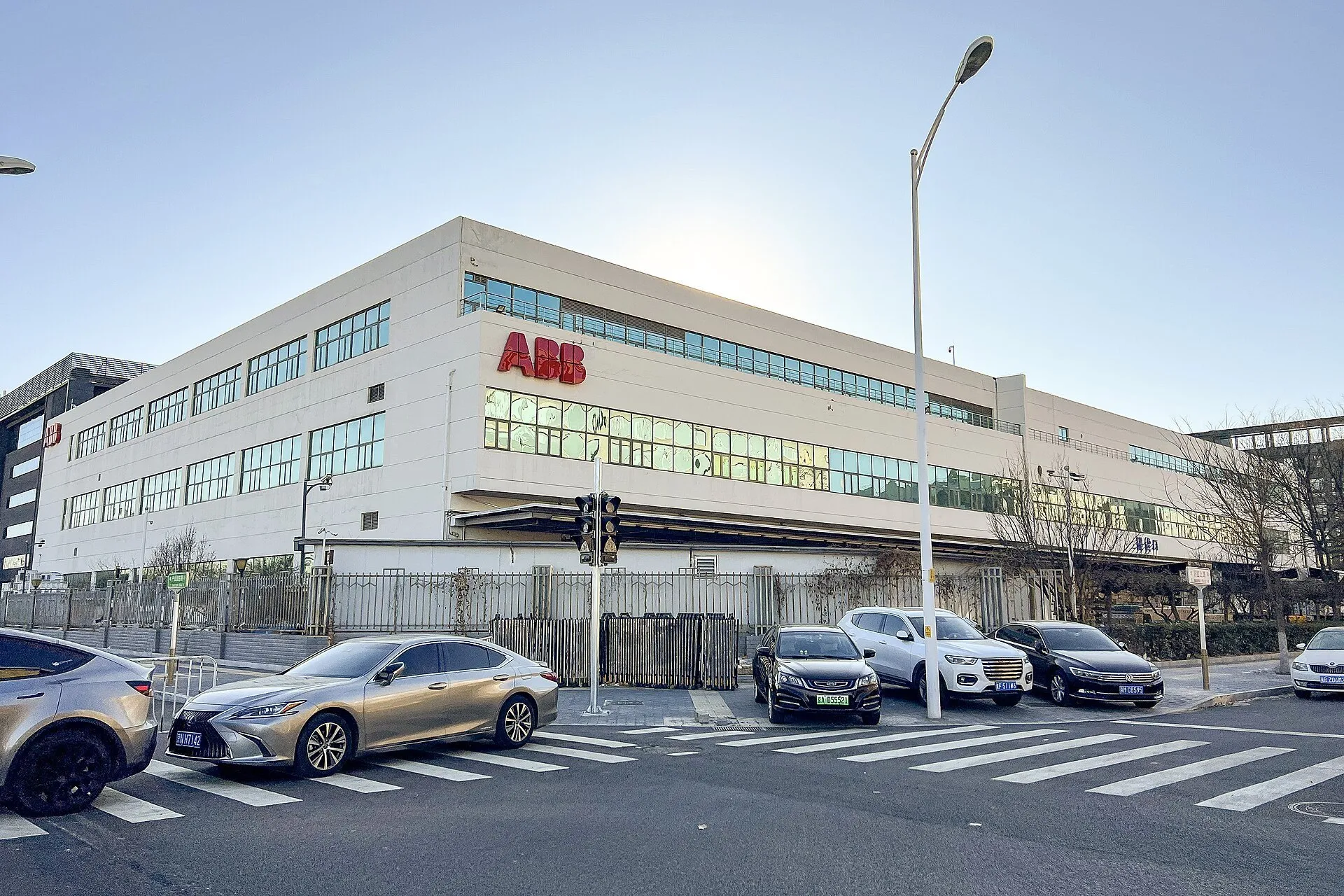
ABB and Epson lead the global industrial robot market by value at about 13% each, followed by Fanuc at about 11%, Yaskawa at about 8% and KUKA at about 6%. These figures come from Statista Market Insights’ 2023 data, the latest vendor-level share split available. Kawasaki, Denso, Universal Robots, Comau and Doosan Robotics complete the usual top 10, but no consistent share figure exists for them.
| Rank | Company | HQ country | Owner/parent | Market share (2023, by value) | Known for |
|---|---|---|---|---|---|
| 1 (tied) | ABB Robotics | Switzerland/Sweden | ABB Ltd (SoftBank deal blocked in China Nov 5, 2026; not closed) | About 13% | Automotive, paint, general industry |
| 1 (tied) | Epson Robots | Japan | Seiko Epson | About 13% | SCARA and small six-axis arms |
| 3 | FANUC | Japan | Listed, independent | About 11% | CNC controls plus robots, yellow arms |
| 4 | Yaskawa (Motoman) | Japan | Listed, independent | About 8% | Motoman arms, servo drives |
| 5 | KUKA | Germany | Midea Group (China) | About 6% | Heavy automotive robots |
| Company | HQ country | Owner/parent | Known for |
|---|---|---|---|
| Kawasaki Robotics | Japan | Kawasaki Heavy Industries | Heavy-payload and painting robots |
| Denso Robotics (Denso Wave) | Japan | Denso Corporation | Compact arms for electronics assembly |
| Universal Robots | Denmark | Teradyne (US) | Collaborative robots (cobots) |
| Comau | Italy | One Equity Partners (majority), Stellantis | Automotive body-in-white lines |
| Doosan Robotics | South Korea | Doosan Group, listed on KOSPI | Cobots |
ABB Robotics (and the SoftBank deal)
ABB Robotics has the broadest product range in the group: large articulated arms, paint robots, YuMi and GoFa cobots and, since its 2019 purchase of ASTI, autonomous mobile robots. The division had about $2.3 billion in revenue in 2025, and ABB now reports it as discontinued operations because of the planned sale. China blocked that sale on November 5, 2026 (see the deal section below), so for now ABB Robotics is still an ABB business.
Fanuc
FANUC Corporation is based in Oshino, Yamanashi, in Japan. Its US subsidiary is in Rochester Hills, Michigan, and some lists wrongly give that as the head office. Fanuc builds the CNC controllers, servo motors and robots itself, so a machine shop can run Fanuc controls, Fanuc arms and Fanuc service as one system. That vertical integration is the main reason customers stay with it.
Epson
Seiko Epson is the world’s leading SCARA maker. Its robots are small, fast and accurate, and they are used heavily in electronics, medical device and precision assembly. Epson’s robot business is a small division of a printer company, which shows why share by value and group revenue measure different things.
Yaskawa
Yaskawa Electric, based in Kitakyushu, sells Motoman arms but started in motors and drives. That background still shows in its servo and inverter business, which supplies many machines that are not Yaskawa robots. Robotics revenue rose 6.4% to ¥119.2 billion in the first half of its fiscal 2025, helped by demand in China and the rest of Asia, while automotive spending in Japan, the Americas and Europe stayed weak.
The first Motoman, launched in 1977, was Japan’s first all-electric industrial robot. Kawasaki came earlier: it built Japan’s first industrial robot, the Kawasaki-Unimate, in 1969 under a Unimation licence. Some competitor lists give both companies credit for “Japan’s first industrial robot”. Only Kawasaki’s claim holds.
KUKA (Midea)
KUKA, in Augsburg, is the familiar orange arm in German car plants. China’s Midea Group took control in 2017 and later took KUKA private, so KUKA has no listing of its own. To get exposure to KUKA, you have to buy Midea, an appliance maker.
Denso, Universal Robots, Comau, Doosan
Denso builds compact arms that suit electronics and auto-parts cells. Universal Robots, in Odense, popularised the cobot and has belonged to Teradyne since 2015. Comau, in Turin, has been majority-owned by One Equity Partners since 2024, with Stellantis keeping a stake. Doosan Robotics listed in Seoul in 2023 on the strength of its cobot range.
Are cobots big or just hyped? Both. Universal Robots is the best-known cobot brand in the world. Still, cobots are a minority of installations. Teradyne’s robotics segment brought in $89 million in Q4 2025, out of $3.19 billion in full-year company revenue that comes mostly from semiconductor test. Cobots matter most to small manufacturers that have never automated before. In units, the volume is elsewhere.
The ABB–SoftBank deal: where it stands in November 2026
The deal has not closed. SoftBank Group agreed on October 8, 2025, to buy ABB’s robotics business for $5.375 billion. The European Commission cleared it on March 12, 2026. Then on November 5, 2026, China’s foreign investment security review office prohibited the acquisition in China. SoftBank says talks with the authorities are continuing.
- October 8, 2025: SoftBank and ABB announce the $5.375 billion deal. ABB drops its plan to spin the division off as a separate listed company. Closing is expected in mid-to-late 2026.
- March 12, 2026: The European Commission clears the deal under its simplified procedure.
- November 5, 2026: SoftBank receives notice that China has prohibited the acquisition in China.
- Now: ABB still owns ABB Robotics. No revised closing date has been announced.
China is the world’s largest robot market and an important manufacturing base for ABB. A block there is not a paperwork delay. ABB and SoftBank now have to decide whether the deal can be restructured, for example by carving out the Chinese operations, or whether it is abandoned. For customers, day-to-day support continues under ABB. For rankings, ABB Robotics belongs under ABB until a closing is announced.
Reality check
Whether the deal goes ahead, and in what form, depends on talks with Chinese regulators that are still under way. Ignore any list that already names SoftBank as ABB Robotics’ owner.
Biggest robotics companies by revenue
Intuitive Surgical is the robotics company with the highest revenue, at about $10.06 billion in FY2025. Fanuc is the largest company focused on factory automation, with record net sales of ¥857.8 billion in the fiscal year to March 31, 2026, roughly $5.5 to $5.7 billion depending on the exchange rate. In warehouse automation, Symbotic is one of the leading sellers.
Surgical: Intuitive Surgical
Intuitive’s preliminary FY2025 results show revenue of about $10.06 billion, up about 21% from $8.35 billion in 2024. Surgeons performed about 3,153,000 da Vinci procedures (up 18%), and Intuitive placed 1,721 da Vinci systems, 870 of them the new da Vinci 5. Its Ion platform covers robotic lung biopsy. For 2026, Intuitive guides worldwide da Vinci procedure growth of about 13 to 15%.
Intuitive’s revenue is larger than its system sales because every procedure uses instruments and accessories. Most of the money comes from those recurring sales and from service, not from the robots.
The surgical runner-up is Stryker’s Mako, a robotic arm for knee and hip replacement that is the most widely used orthopaedic robot. Stryker reports Mako inside its orthopaedics business, so no standalone revenue figure exists to compare with Intuitive. Medtronic’s Hugo soft-tissue system is newer and is also not broken out.
Did you know?
About 3.15 million surgeries were performed with da Vinci systems in 2025, according to Intuitive Surgical’s preliminary full-year results.
Factory automation: Fanuc and peers
Fanuc’s operating income rose 15.7% to ¥183.8 billion, and after first-quarter results in July 2026 it raised its net sales forecast for the fiscal year to March 2027 to ¥948.1 billion. Its robot business is growing fastest. Robot sales rose 25.5% year on year in January to March 2026, and robot orders reached ¥100.6 billion, the first time in 12 quarters they topped ¥100 billion.
When you read segment data, compare like with like:
| Company | How robot revenue is reported | Latest figure |
|---|---|---|
| Fanuc | Robot segment inside factory automation, robot and Robomachine results | Group ¥857.8B (FY to March 2026) |
| Yaskawa | Robotics segment, separate from motion control | ¥119.2B (H1 FY2025) |
| ABB | Robotics division, now in discontinued operations | About $2.3B (2025) |
| Teradyne | Robotics segment (UR plus MiR) | $89M (Q4 2025) |
Comparing Fanuc’s group total with ABB Robotics’ divisional revenue overstates Fanuc’s lead in robots.
So who makes the most robots, Fanuc or ABB? Public commentary usually credits Fanuc with the larger installed base of industrial robots, while ABB and Epson lead on share by value in the 2023 data. Neither company publishes annual unit shipments in a way that settles the question.
Warehouse automation: Symbotic
Symbotic builds full warehouse systems: autonomous bots that store and retrieve cases inside dense racking, plus the software that runs them. Walmart is its anchor customer and accounts for most of its revenue, and in January 2025 Symbotic bought Walmart’s Advanced Systems and Robotics business. Revenue was about $2.25 billion in FY2025, and third-quarter FY2026 revenue rose 22% to about $721 million with net income of $55 million. The heavy reliance on one customer is the main risk to watch.
Where the robots go: IFR 2025 installation data
According to the International Federation of Robotics’ World Robotics 2026 report, published September 24, 2026, a record 5 million industrial robots were working in factories at the end of 2025, up 9%. Installations rose 11% to more than 600,000 units (603,307 in the detailed tables). The IFR forecasts 655,000 installations in 2026 and 806,000 in 2029.
| Country/region | Units installed (2025) | YoY change | Global share |
|---|---|---|---|
| World | 603,307 | +11% | 100% |
| China | About 354,000 | +20% | About 59% |
| United States | About 38,400 | +12% | About 6.4% |
| Japan | 36,219 | −19% | About 6.0% |
| Europe | Fewer than 25,000 | −8% | About 4% |
China
China is why top-10 lists built on Western and Japanese data now miss much of the market. More than half the world’s new robots go to Chinese factories, and domestic vendors such as Estun, Inovance and Efort have taken a growing share of those installations. KUKA’s ownership by Midea also means one of the “big four” already has a Chinese parent. Chinese makers rarely appear on lists in English because their sales are mostly domestic and they report in yuan.
Did you know?
China installed about 354,000 industrial robots in 2025, roughly 59% of all robots installed worldwide that year, according to IFR World Robotics 2026.
United States
In 2025 the US passed Japan to become the second-largest market for new installations, with about 38,400 units. That ranks the US by demand. None of the largest industrial arm makers is American, so most of the robots going into US factories come from Japanese, European and Chinese vendors.
Japan and Europe
Japanese installations fell 19% and European installations fell 8% to fewer than 25,000 units. That decline mostly reflects weak automotive and machinery investment, not a shift away from automation. Japanese vendors still sell around the world from a shrinking home market.
Largest robotics companies in the USA
The largest US robotics company is Intuitive Surgical, by a wide margin. Symbotic is second among US companies that sell robots, at about $2.25 billion in FY2025. After them come companies that build robots mainly for their own use or for niche markets, plus well-funded private humanoid startups. It helps to separate the companies that sell robots from those that mainly deploy them.
| Company | What it builds | Sells robots or deploys them | Ownership |
|---|---|---|---|
| Intuitive Surgical | da Vinci, Ion surgical systems | Sells | Public (ISRG) |
| Symbotic | Warehouse storage and retrieval systems | Sells (Walmart is anchor customer) | Public (SYM) |
| Amazon Robotics | Warehouse drive units, arms | Deploys internally | Amazon (AMZN) |
| Teradyne Robotics | Universal Robots cobots, MiR mobile robots | Sells | Teradyne (TER) |
| Rockwell Automation | Clearpath and OTTO autonomous mobile robots | Sells | Public (ROK) |
| Zebra Technologies | Fetch autonomous mobile robots | Sells | Public (ZBRA) |
| Locus Robotics | Warehouse picking AMRs | Sells and leases (robots as a service) | Private |
| Boston Dynamics | Spot, Stretch, Atlas | Sells Spot and Stretch | Hyundai Motor Group |
| Agility Robotics | Digit humanoid | Sells/leases | Private |
| Figure AI | Figure 03 humanoid | Early deliveries | Private |
| Apptronik | Apollo humanoid | Pilots, no disclosed deliveries | Private |
| John Deere | Autonomous tractors and autonomy kits | Sells | Public (DE) |
| Oceaneering | Subsea ROVs | Sells and operates | Public (OII) |
Amazon is the biggest operator of mobile robots in the US and probably in the world. The fleet started with its 2012 purchase of Kiva Systems, and Amazon said in 2025 that it had deployed more than 1 million robots. It does not sell them to other companies, so it sits outside the revenue rankings.
Rockwell entered mobile robots by buying Canada’s Clearpath Robotics, including its OTTO Motors industrial AMR line, in 2023. That gives the largest US factory-automation supplier its own robot fleet product, sold alongside its PLCs and drives.
Humanoid robotics companies: shipping vs promising
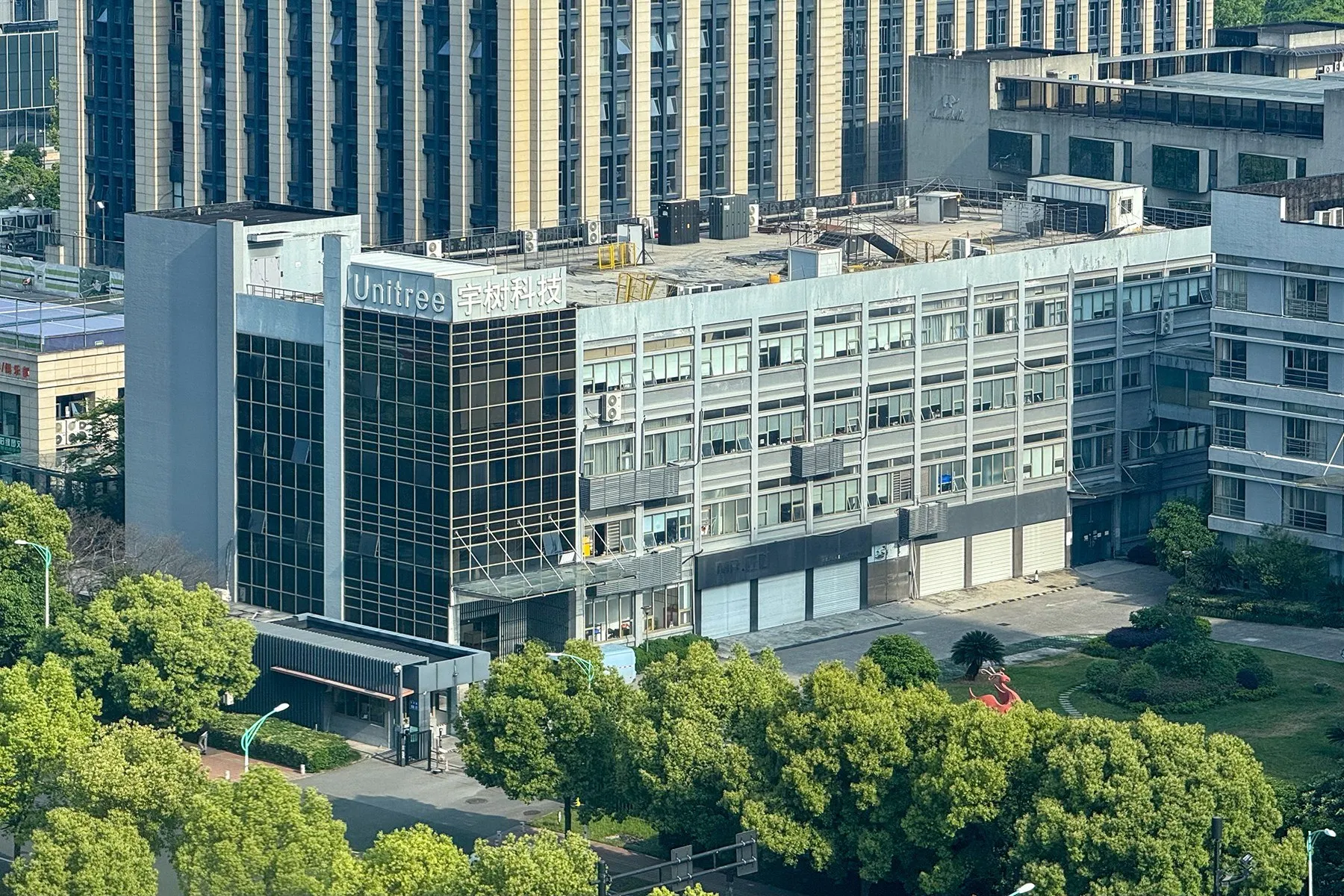
Three Chinese companies have real humanoid volume: Omdia ranks AgiBot first for 2025 with 5,168 units, Unitree reports more than 5,500, and UBTech delivered 1,079 full-size humanoids. Unitree and UBTech are both listed and publish revenue. Figure AI has the highest valuation and early deliveries, Agility has paying commercial deployments, and Boston Dynamics and Tesla have impressive machines but no disclosed meaningful external humanoid sales.
| Company | Status | Valuation or funding | Units delivered | Revenue disclosed |
|---|---|---|---|---|
| Unitree Robotics | Public, STAR Market 688836 | About RMB 61B (~$9B) at IPO price | More than 5,500 humanoids in 2025 (company figure) | Yes, RMB 1.70B (2025) |
| AgiBot | Private, Shanghai | Not publicly confirmed | 5,168 in 2025 (Omdia estimate) | No |
| UBTech Robotics | Public, HKEX 9880 | Market-traded | 1,079 full-size humanoids in 2025 | Yes, RMB 2.01B total, humanoids 41.1% |
| Figure AI | Private | $39B (September 2025, latest confirmed) | More than 350 Figure 03 (April 2026) | No |
| Apptronik | Private | About $5B to $5.5B after $520M raise (February 2026) | Not disclosed | No |
| 1X Technologies | Private | $100M Series B (2024); larger round reported, unconfirmed | NEO pre-orders since October 2025 | No |
| Agility Robotics | Private | Not disclosed | Commercial Digit fleets (e.g. GXO) | No |
| Boston Dynamics | Hyundai subsidiary | No separate valuation | Atlas pre-commercial; Spot shipping | Not broken out |
| Tesla Optimus | Tesla program | Part of Tesla | Internal use, no external sales | No |
Unitree’s IPO
Unitree priced its Shanghai STAR Market IPO at RMB 150.80 per share, raised about $904 million and began trading on August 19, 2026. Retail demand was more than 8,000 times the shares on offer, and the stock opened about 629% above the offer price. Its prospectus shows RMB 1.70 billion in 2025 revenue (up from RMB 392.77 million in 2024), net profit of about RMB 278 million, and sales of 33,294 quadrupeds and 5,632 humanoids from 2023 to 2025.
There is a catch. The Robot Report noted that about 73.6% of Unitree’s humanoid revenue came from research and education buyers, and only about 9% from industrial applications. Unitree is a real hardware business. Its humanoids are not yet a factory workforce.
UBTech and AgiBot
UBTech, in Shenzhen, has been listed in Hong Kong since 2023, so Unitree is not the only listed humanoid maker. UBTech’s 2025 revenue rose 53.3% to about RMB 2.01 billion, and full-size humanoids jumped from 2.7% of sales in 2024 to 41.1%, about RMB 820 million. It still lost about RMB 790 million. Its Walker S2, which can swap its own battery, began mass delivery at the end of 2025, aimed at car plants and logistics.
AgiBot, in Shanghai, tops Omdia’s 2025 ranking with an estimated 39% of global humanoid shipments. It is private and does not publish audited unit or revenue figures, so the Omdia number is an analyst estimate.
Figure AI
Is Figure worth $39 billion with no disclosed revenue? Only if humanoids become a large general-purpose labour market and Figure takes a big share of it. Figure says it raised output from one robot a day to one an hour in under 120 days, which is real progress in manufacturing. Reports of a new round in late 2026 come from secondary aggregators with a mixed record and have not been confirmed by Figure, so $39 billion remains the figure to use. Investors are pricing what Figure might sell in the future, and nothing in its disclosed numbers shows that yet.
Apptronik and 1X
Apptronik, in Austin, closed a $520 million Series A extension in February 2026 led by Google, Mercedes-Benz and B Capital. Reports put its valuation at about $5 billion to $5.5 billion. Its Apollo humanoid is in pilots with partners, with no disclosed delivery count.
1X Technologies, founded in Norway and backed by OpenAI’s startup fund, is the clearest home-robot bet. It opened NEO pre-orders on October 28, 2025, at $20,000 or $499 a month, with deliveries planned for 2026. Its last confirmed round is a $100 million Series B led by EQT Ventures in January 2024. News reports in September 2025 said it was seeking up to $1 billion at a valuation of $10 billion or more, but no closing has been confirmed.
Agility, Boston Dynamics, Tesla
Agility’s Digit moves totes in paid deployments with GXO, which makes it one of the few humanoids doing contracted work. Hyundai has said it plans to use Boston Dynamics’ electric Atlas in its own plants. Tesla has shown Optimus in many demos, some of them teleoperated by Tesla’s own admission, but it has not sold the robot to outside customers.
AI robotics platforms
The biggest names in “AI robotics” mostly don’t build robots. They sell the simulation, compute and foundation models that robot makers build on, so they sit outside the four rankings above.
- NVIDIA: the Isaac platform (Isaac Sim for simulation, Isaac Lab for robot learning), the GR00T humanoid foundation models first shown in March 2025, and Jetson Thor onboard computers. Most humanoid startups train or run on some part of this stack.
- Physical Intelligence: a San Francisco startup building general-purpose robot policies. It released its π0 model as open source in 2025.
- Skild AI: a Pittsburgh startup building the Skild Brain, a model meant to control many robot body types.
- Google DeepMind: Gemini Robotics models, with Apptronik as a hardware partner.
What counts is whether a robot maker can turn these models into reliable, paid work. Until the robot makers report that, platform hype is not robot revenue.
Reality check
No humanoid maker has yet published audited evidence of large fleets doing autonomous, paid industrial work. Read every demo video with one question in mind: was it autonomous, scripted, sped up or teleoperated?
Logistics, consumer and field robotics
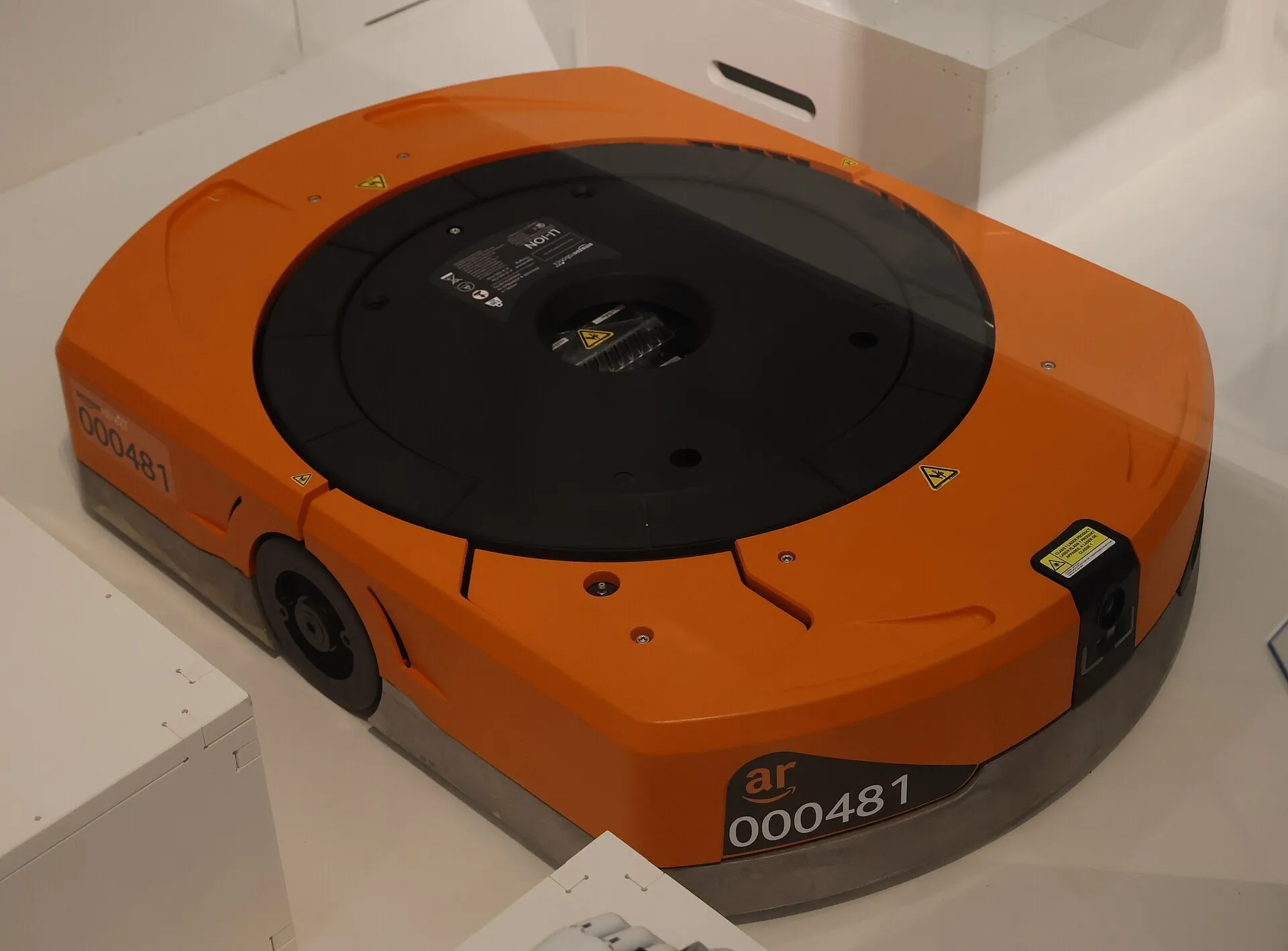
Amazon Robotics is the largest logistics robot operation, and Symbotic is the largest warehouse-automation seller by revenue. Geek+, which listed in Hong Kong in 2025, Zebra (which bought Fetch Robotics in 2021), Rockwell’s OTTO line and Locus Robotics are among the main vendors of mobile warehouse and factory robots. In field robotics, John Deere’s autonomy work and Oceaneering’s subsea ROVs earn real revenue, though neither reports a robot segment of its own.
Locus differs from most of its peers in how it charges. It leases its picking robots as a service, so customers pay per robot over time instead of buying a fleet upfront. That model suits retailers with seasonal peaks.
Defense and drone makers are counted separately on this page. AeroVironment, best known for small uncrewed aircraft for the US military, is the largest US-listed name in that field, and consumer drone makers such as DJI would top a drone-only list. Neither belongs in a ranking of industrial, surgical, logistics and humanoid robots without changing what the list measures.
What happened to iRobot
iRobot filed for Chapter 11 on December 14, 2025. Shenzhen Picea Robotics, its secured lender and contract manufacturer, completed the acquisition, and iRobot came out of bankruptcy as a US subsidiary of Picea. The old IRBT shares were cancelled. If you own a Roomba, the company is still operating and the brand continues under new ownership. For app and warranty questions, check iRobot’s own support notices.
Old tickers
iRobot’s IRBT shares were cancelled in the Chapter 11 process. Treat any list that still shows iRobot as a public stock as out of date throughout.
Investing in robotics: public tickers and what you actually own
Most large robot makers are listed, but often inside a bigger company. The table shows what each ticker actually gives you. It is not investment advice.
| Company | Listing | What the share really is |
|---|---|---|
| Intuitive Surgical | Nasdaq: ISRG | Near pure-play surgical robotics |
| Symbotic | Nasdaq: SYM | Warehouse automation pure-play; heavily Walmart-dependent |
| FANUC | Tokyo: 6954 | Factory automation (CNC plus robots) |
| Yaskawa Electric | Tokyo: 6506 | Motion control plus robots |
| ABB | SIX Swiss: ABBN | Electrification group; robotics held for sale, deal blocked in China Nov 5, 2026, not closed |
| Seiko Epson | Tokyo: 6724 | Mostly printers |
| Midea Group | Shenzhen: 000333 | Appliances; owns KUKA |
| Teradyne | Nasdaq: TER | Mostly chip test; owns Universal Robots |
| Rockwell Automation | NYSE: ROK | Industrial automation; owns Clearpath and OTTO |
| Hyundai Motor | KRX: 005380 (OTC: HYMTF) | Carmaker; controls Boston Dynamics |
| Unitree Robotics | Shanghai STAR: 688836 | Pure-play quadrupeds and humanoids |
| UBTech Robotics | HKEX: 9880 | Humanoids plus education and consumer robots |
| Doosan Robotics | KOSPI: 454910 | Cobot pure-play |
| Figure AI, Agility, Apptronik, 1X, AgiBot | Private | No public shares |
Can you buy Boston Dynamics stock? No. HYMTF is an over-the-counter quote for Hyundai Motor, and Boston Dynamics makes up a small part of that company. UiPath, which appears on some robotics lists, sells robotic process automation software and builds no physical robots. The same goes for NVIDIA: its robotics platform is real, but buying NVDA is overwhelmingly a bet on data-centre chips.
Engineer's note
Rankings by market share say nothing about support in your area. If you are choosing a vendor, compare local integrators, spare-parts stock and service response times.
Which ranking should you use?
Use the ranking that matches your goal. Investors should start with robot segment revenue and pure-play listings such as ISRG, SYM, 688836 and 9880, and remember that each carries concentration risk. Engineers choosing an employer should look at units shipped and paying deployments: Fanuc, Yaskawa, ABB, Intuitive, Symbotic and Amazon Robotics run robots at production scale, while Unitree, UBTech and Agility have humanoid hardware already in customers’ hands. Buyers should ignore valuations completely and check service coverage. The most useful number to watch over the next year is the IFR’s China figure, because it shows where new robots go and which vendors will win next.
FAQ
What are the largest robotics companies in the world?
By revenue from robots, Intuitive Surgical is the largest, with about $10.06 billion in 2025, followed by ABB Robotics and Symbotic at about $2.3 billion each. In industrial robots, ABB, Epson, Fanuc, Yaskawa and KUKA lead on market share. Amazon runs the largest fleet of mobile robots, and AgiBot and Unitree lead humanoid shipments.
What are the leading companies in industrial robotics?
ABB and Epson (about 13% each by value in 2023), Fanuc (about 11%), Yaskawa (about 8%) and KUKA (about 6%), followed by Kawasaki, Denso, Universal Robots, Comau and Doosan Robotics.
Which robotics company has the highest revenue?
Intuitive Surgical, at about $10.06 billion in FY2025. Fanuc’s net sales of ¥857.8 billion are a group total that includes CNC systems, not robots alone.
What are the largest robotics companies in the USA?
Intuitive Surgical, Symbotic, Amazon Robotics (internal use only), Teradyne’s Universal Robots unit (Danish-built, US-owned), Rockwell’s Clearpath and OTTO, Zebra’s Fetch, Locus Robotics, Boston Dynamics (owned by Hyundai), Agility Robotics, Figure AI and Apptronik.
What is Symbotic?
A US warehouse-automation company listed on Nasdaq as SYM. It builds autonomous storage and retrieval systems, counts Walmart as its anchor customer and had about $2.25 billion in FY2025 revenue.
Is Boston Dynamics publicly traded?
No. Hyundai Motor Group controls it, and it has no ticker of its own.
Who owns ABB Robotics now?
ABB. SoftBank’s $5.375 billion purchase was cleared in the EU but blocked in China on November 5, 2026, and it has not closed.
What happened to iRobot?
It filed for Chapter 11 in December 2025, its shares were cancelled, and it is now a subsidiary of Shenzhen Picea Robotics.
Which humanoid robot companies are actually shipping robots?
AgiBot (5,168 in 2025 by Omdia’s estimate), Unitree (more than 5,500 in 2025 by its own count), UBTech (1,079 full-size humanoids in 2025), Figure (more than 350 Figure 03 robots by April 2026) and Agility (commercial Digit deployments).
Is Unitree a public company?
Yes. It has traded on Shanghai’s STAR Market under 688836 since August 19, 2026. UBTech, listed in Hong Kong under 9880, is the other major listed humanoid maker.
What are the top AI robotics companies?
NVIDIA is the largest enabler, through Isaac, GR00T and Jetson Thor. Physical Intelligence, Skild AI and Google DeepMind build robot foundation models. Among robot makers, Figure, Apptronik and 1X market themselves most heavily on AI.
What is the highest paid job in robotics?
Robotics software roles, especially machine learning, perception and autonomy engineers, and robotics engineering managers are usually the best paid. The US Bureau of Labor Statistics does not track “robotics engineer” as its own occupation. It counts these workers under mechanical, electrical and computer hardware engineers and software developers, and its architectural and engineering managers category is among the highest-paid engineering occupations it reports.
Why are there no Chinese companies on most top 10 lists?
Most of those lists use older Western market-share data. Chinese vendors sell mainly in their home market and report in yuan, so they get left out even though China installs about 59% of the world’s new robots and Chinese firms lead humanoid shipments.
What are the different types of humanoid robots?
The main types are full-size bipeds for general work (Atlas, Figure 03, Optimus, Apollo, Walker S2), logistics humanoids such as Digit, home humanoids such as 1X’s NEO, smaller research and education humanoids such as Unitree’s G1, and wheeled-base dual-arm robots that put a humanoid upper body on a mobile base.
Keep reading
 Robotics CompaniesNeato Robotics and What Happened to the CompanyNeato Robotics, the robot vacuum maker, no longer exists as a working business. Its owner, Vorwerk, closed it…Nov 9, 2026 · 21 min read
 Robotics CompaniesAdvanced Integration Technology and Aerospace AutomationAdvanced Integration Technology (AIT) is a Plano, Texas company that designs and builds automation, tooling and assembly systems…Oct 24, 2026 · 4 min read
 Robotics CompaniesTop robotics companies leading the industry todayMost lists of robotics companies mix shipping industrial giants with startups that have only posted a video. We…Oct 21, 2026 · 20 min read
Credits and sources
By RWT Robotics Editorial Team
- Facts were checked against the sources below before publication.
- Published
Checking and sources
- Researched from 8 sources, listed below.
- Facts are checked against those sources; anything we cannot confirm is corrected, labelled or removed.
Sources (8)
- IFR: Five million robots now operate in factories globally (ifr.org)
- IFR World Robotics 2026 press release: USA (ifr.org)
- The Robot Report: 5 million robots now working in factories worldwide (therobotreport.com)
- Intuitive announces preliminary Q4 and full-year 2025 results (investor.intuitivesurgical.com)
- Fanuc financial results for the year ended March 31, 2026 (finance.technews.tw)
- Fanuc reference materials, March 2026 (fanuc.co.jp)
- SoftBank to acquire ABB's robotics business (group.softbank)
- SoftBank notice on China review of ABB Robotics acquisition (group.softbank)