By RWT Robotics Editorial Team Published
CONFIRMED
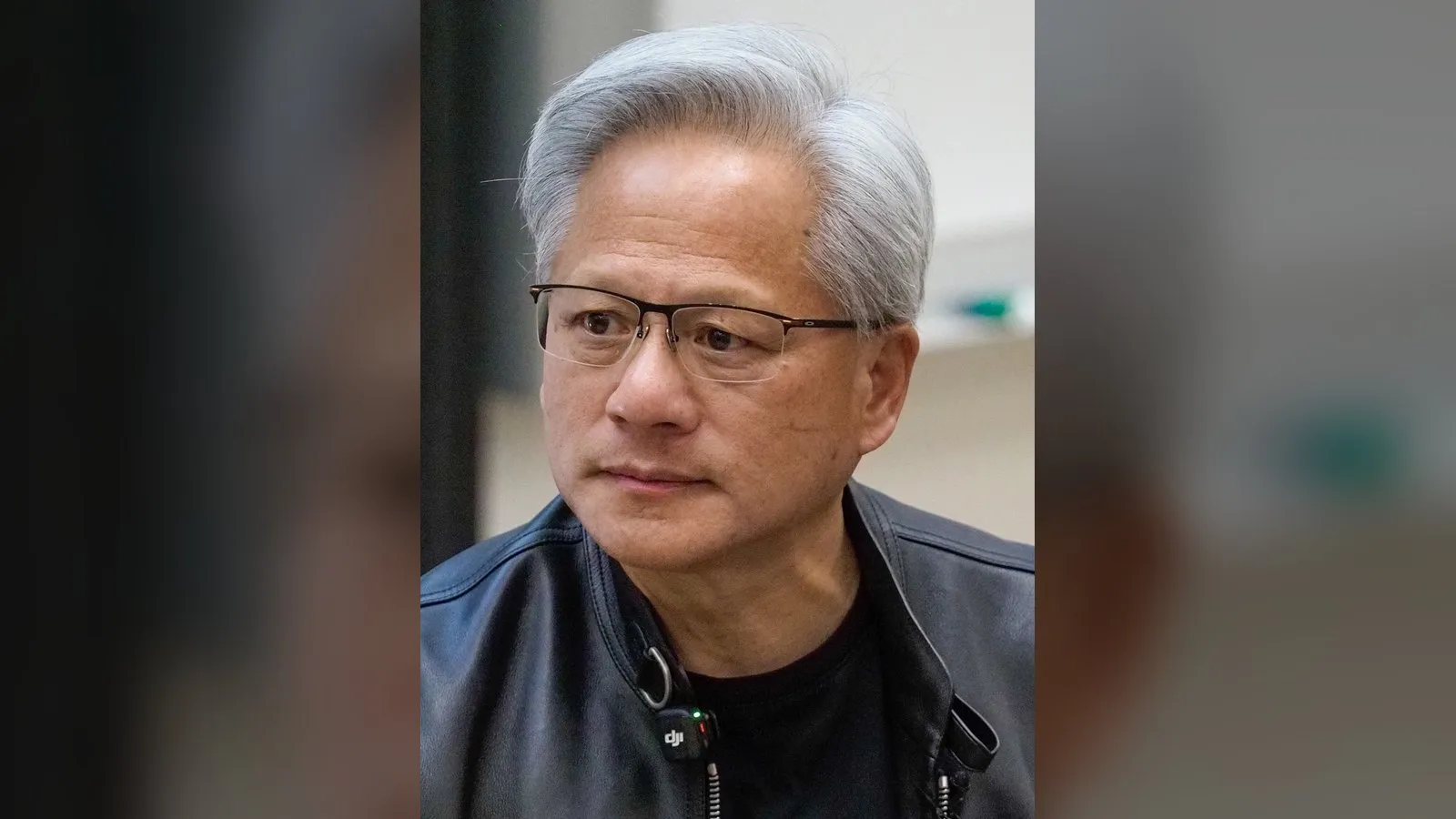
Jensen Huang is stepping down as Nvidia’s CEO, CNBC and CNN report, and CNN reports that CFO Colette Kress is serving as interim CEO. TechCrunch’s timeline ties the exit to a personal scandal, not to any robotics strategy. For robot makers building on Nvidia platforms such as Thor and GR00T, the confirmed change so far is at the top of the org chart, not in the technology they depend on.
What we know
CNN reported Huang’s departure on November 11, 2026. CNBC followed with live coverage on November 12. According to CNN, Colette Kress, Nvidia’s CFO, is now interim CEO. No permanent successor has been confirmed.
The reason is personal, not technical. TechCrunch’s timeline says Huang resigned after reports of relationships with two women, one of whom is allegedly a Chinese spy. TechCrunch also reports that Huang wrote to employees that he cheated on his wife. The spy claim is an allegation in published reporting. We are not adding to it, and we will not speculate about the people involved.
The timing makes things worse for Nvidia. CNBC reports that investors were already worried about the debt being taken on to fund AI infrastructure, and that Nvidia’s role as a financier of that infrastructure is under scrutiny. The leadership change lands on top of an existing question about money, not on a calm balance sheet story.
One framing circulating this week does not hold up. A headline from The Robot Report says Nvidia replaced its CEO over its China AI and robotics position. CNBC, CNN and TechCrunch attribute the exit to the personal scandal and the alleged spy link. None of them cite robotics concerns. We could not retrieve The Robot Report article itself, so we can only judge the headline, and the headline is not supported by the reporting we could check.
There is relevant background. In July 2026, Nvidia and Japan’s government announced a national physical AI infrastructure. Noetra Corp., a consortium majority-owned by SoftBank, NEC, Sony and Honda, is building a Vera Rubin AI factory with 27,500 Rubin GPUs. Fanuc, Yaskawa and Kawasaki were part of the same announcements. Nvidia’s own release describes all of this as plans, not demonstrated capabilities.
No robot demos are part of this story, so there is no autonomy or teleoperation claim to check this time.
What is rumored
The strongest rumor comes from a strong outlet, but secondhand. The Financial Times reported, as relayed in secondary coverage we saw, that Nvidia’s board has approached Arm CEO Rene Haas about the top job. The FT has a solid track record. We have not seen the original report, and Nvidia has not confirmed it. Treat it as a credible lead, not a hire.
Fox News live coverage, citing an unnamed report, says some Nvidia staff are calling for Huang to be brought back. We could not verify the underlying report. That is a grade D claim and it stays one until someone names a source.
A BigGo Finance headline, found through a news aggregator, says the Japanese government is monitoring developments amid “concerns over a physical AI setback.” We found no official Japanese statement and no major-outlet report backing it. Given Japan’s July commitments, monitoring would be unsurprising. Unsurprising is not the same as confirmed.
Finally, commentary from mikekalil.com and Fierce Sensors argues that Figure AI and other physical AI firms are exposed to the Nvidia fallout, and that Huang’s exit gives them reason to move away from Nvidia. These are opinion and analysis pieces. We found no company statements or major-outlet reporting supporting them. Figure AI has not said anything in the material we reviewed.
What we don’t know yet
Who runs Nvidia long term. Kress is interim, the Haas report is unconfirmed, and the board has said nothing public that we can cite.
Whether anything changes for Thor or GR00T. None of the coverage from CNBC, CNN or TechCrunch mentions Nvidia’s robotics roadmaps. No partner has made a public statement that we found. Anyone telling you a specific robotics program is paused, accelerated or cancelled is ahead of the evidence.
Whether Japan’s physical AI plans shift. The Noetra AI factory and the industrial partnerships with Fanuc, Yaskawa and Kawasaki were announced as plans. We have no reporting on how, or whether, the leadership change touches them.
How the financing scrutiny plays out. CNBC flags investor worry about AI infrastructure debt and Nvidia’s financier role. What that means for specific customers or projects has not been reported.
What it means
Start with what an engineer would check first: dependencies. Robotics companies that build on Nvidia platforms are tied to its silicon, its software stack and its release schedule. A CEO change does not alter a chip that is already designed or an SDK that is already in developers’ hands. Roadmaps are carried by engineering teams and contracts, and none of the confirmed reporting says those have moved.
What a CEO change can do is shift priorities over quarters, not days. Huang was the company’s most visible champion of physical AI. A new leader, interim or permanent, might weigh robotics differently against data center business. That is a reasonable thing to watch. It is not a thing that has happened.
The financing angle is the more concrete risk. CNBC’s reporting puts Nvidia’s role as a funder of AI infrastructure under scrutiny at the same moment its leadership is in flux. Large announced projects, like the Japan AI factory, are where financing questions tend to surface first. That project is still described by Nvidia as a plan, which is exactly why it deserves attention rather than assumptions.
For robotics teams, the practical advice is boring and correct. Read your contracts, track official Nvidia and partner statements, and ignore the takes claiming this was secretly about robotics. The best reporting available says it was not. If the company’s robotics strategy changes, it will show up in roadmaps and product announcements, and we will report it when it does.
Keep reading
 Robotics NewsAsus Gallop humanoid targets human-pace packing, but speed is unverifiedAsus says its Gallop humanoid is training to pack 15 motherboard parts at human pace. The 99.5% target…Nov 13, 2026 · 4 min read
 Robotics NewsFigure AI night-shift coordinator posting pays $45 an hour, notes limited engineering supportA Figure AI posting offers $40-$45 an hour to lead a night crew for humanoid robots. It's one…Nov 12, 2026 · 4 min read
 Robotics NewsAgile Robots’ $8.5B valuation rests on a 2,000-humanoid target the company set for 2026Agile Robots raised $500M at $8.5B, led by SoftBank with Nvidia. Its humanoid output figures are company claims,…Nov 12, 2026 · 4 min read
Credits and sources
By RWT Robotics Editorial Team
- Published