
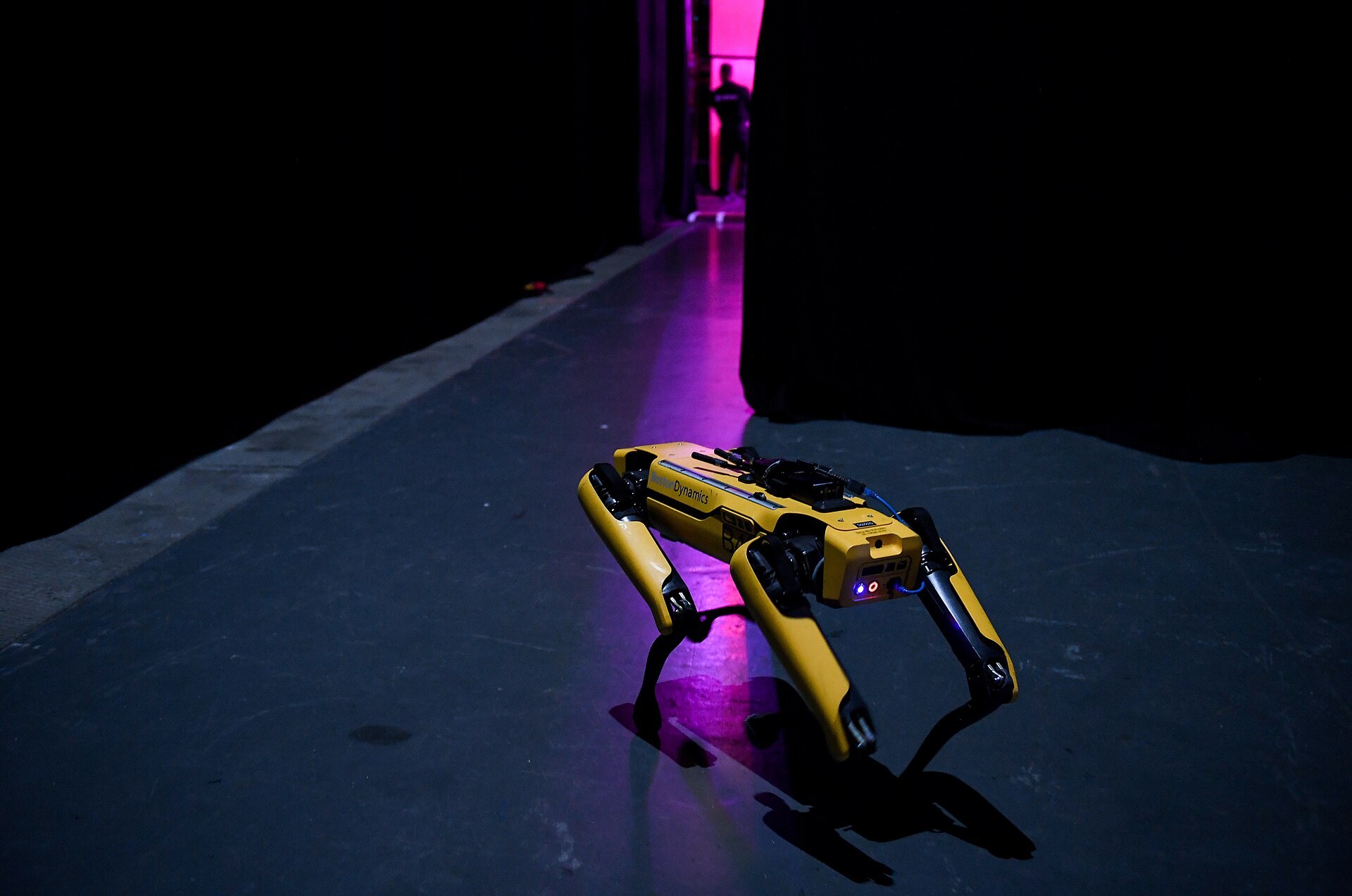
CONFIRMED
A Boston Dynamics spokesperson said “nearly half” of the roughly 300 signatures on an employee petition were entered as “Anonymous.” Despite early framing of the deal as a “reported plan,” contract records show it is already awarded, and management is standing by it.
What we know
WBUR obtained a copy of the petition, which was sent to company leadership in early September. The Boston Globe dates the letter Sept. 8. WBUR puts Boston Dynamics’ headcount at more than 1,500 people.
The deal itself is not a direct ICE purchase. The contract was publicly listed Monday, Sept. 28. It followed an ICE forecast listing for Spot posted Aug. 27, which WBUR and The Next Web say set off backlash in late August.
Ars Technica reported on Oct. 26 that more than 300 employees signed against supplying modified Spot units to ICE, and that management backed the deal while saying the robots would not be used as weapons. A caveat on sourcing: we could not open the Ars piece directly, so its reporting reaches us through UA.NEWS and the Korean outlet Digital Today.
Boston Dynamics told Boston.com on Sept. 30 that ICE is using the robots for Homeland Security Investigations, which handles transnational crime, rather than Enforcement and Removal Operations. The company called any suggestion that the robots will support immigrant detentions or deportations false.
The company also points to Spot’s terms of sale, which, as reported by Ars Technica and relayed by UA.NEWS and Gadget Review, prohibit intentionally using the robot to harm or intimidate people or animals, as a weapon, or to enable a weapon. Boston Dynamics says no customer, DHS included, has violated those terms. Its listed remedies are voiding the warranty, ending software updates and the license, and legal action.
Per Digital Today and iTechPost, the petition also cited the September 2025 immigration raid on a Hyundai Motor Group plant in Georgia. Boston Dynamics is a Hyundai Motor Group company. Demonstrators protested outside its Waltham headquarters on Oct. 15, according to a Boston Globe photo caption.
What we don’t know yet
The exact signature count is fuzzy. IBTimes AU says “nearly 300,” Ars (via UA.NEWS) says “more than 300,” and WBUR’s own lead says “dozens,” even as its spokesperson quote says roughly 300. Headcount varies too: about 1,400 per the Globe and Digital Today, more than 1,500 per WBUR. The widely repeated “one-fifth of the workforce” figure is Gadget Review’s own estimate, not a company number.
We also do not know what Radeco’s modifications involve, or how Boston Dynamics would detect a terms-of-sale violation if one occurred. Digital Today gives a Sept. 4 petition date, but labels the year 2025, which looks like an error, and we treat that date as unverified.
What it means
For readers asking whether this changes Spot’s future: nothing in the reporting suggests it does. The contract is awarded, management is proceeding, and no outlet reports any change to the product or its sales.
The more interesting engineering point is the enforcement model. Boston Dynamics’ leverage over end use is largely software: cut off updates and the license, and a fielded Spot slowly becomes a less capable machine. That is real leverage on a robot that depends on vendor software. It is also reactive. It works only after a violation is identified, and the company has not said how it would identify one, particularly when units pass through a third-party modifier.
The petition shows that a meaningful share of staff, by any of the reported counts, does not accept the HSI-versus-deportation distinction as sufficient. That nearly half signed anonymously says something about how comfortable they feel dissenting openly. Whether that pressure ever moves policy is a question the company has so far answered with a no.
Keep reading
 Robotics NewsMachenta’s $40M seed is confirmed, but one-demo robot learning is unproven outside the labImperial says Machenta raised a $40M seed led by Creandum and USV. One-demo learning from simulation is the…Oct 27, 2026 · 4 min read
 Robotics NewsBoston Dynamics reportedly asks Korean suppliers to prep for 10,000 Atlas unitsKorean media say Atlas suppliers were asked to prep for 10,000 units. Only Mobis's actuator role is official,…Oct 27, 2026 · 4 min read
 Robotics NewsGXO adds Digit humanoids at two more warehouses, but says payback is about two years awayGXO is adding Digit humanoids at warehouses in North Carolina and Tennessee, yet its CEO says humanoid payback…Oct 26, 2026 · 3 min read