CONFIRMED
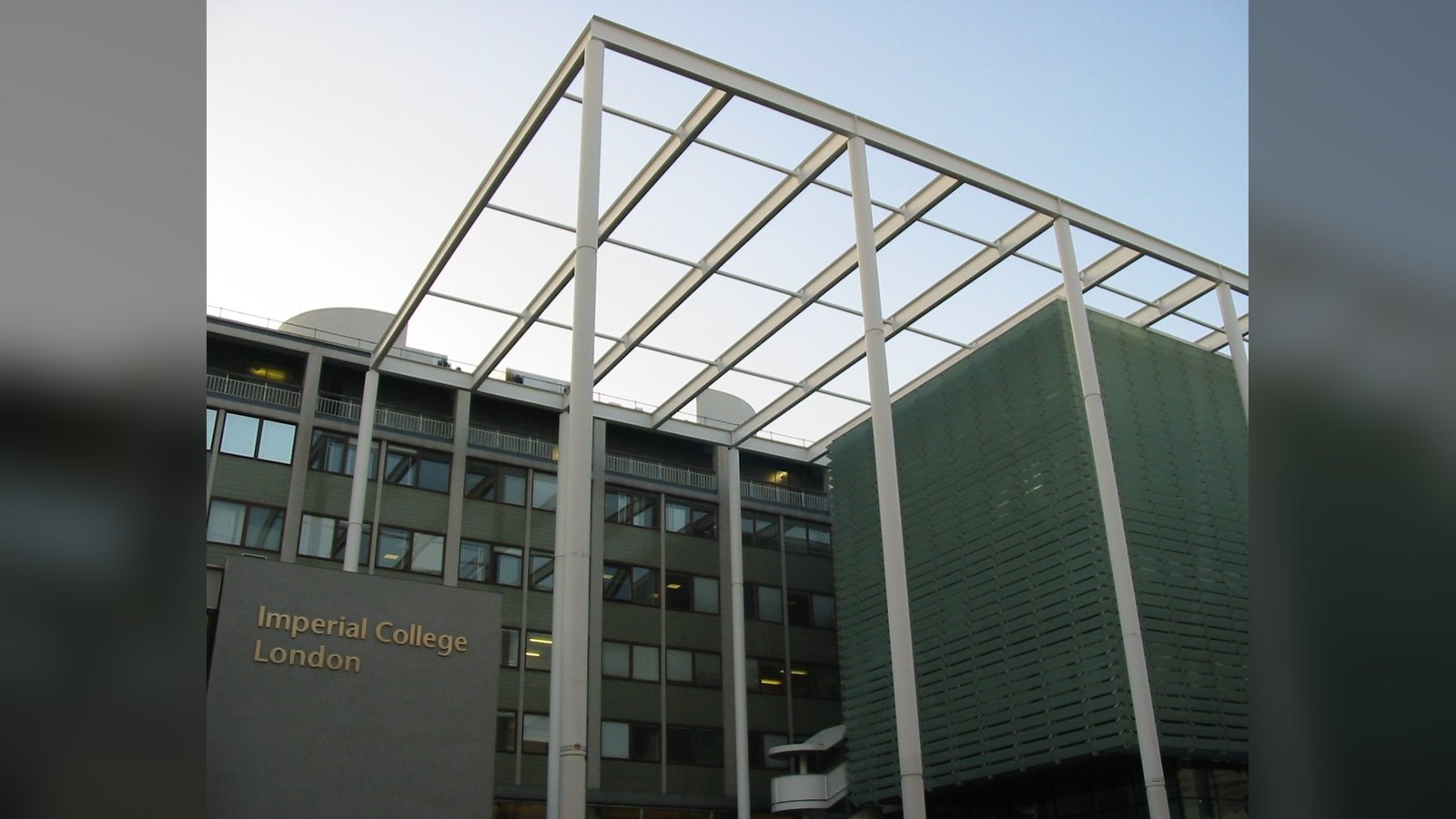
Imperial College London spinout Machenta has raised a $40 million seed round led by Creandum and Union Square Ventures, according to an Imperial news release dated 27 October 2026. The company is building a model that it says lets robots learn a new task from a single demonstration after pre-training entirely in simulation. The money is real. Whether the method holds up on real hardware, outside a lab, has not been shown.
What we know
Imperial College London confirmed the $40 million raise and calls it the largest ever seed round by a UK robotics startup. Keep the source in mind. Imperial is Machenta’s parent institution, so this is an institutional announcement, not independent reporting.
Imperial’s release says the round was “led by” Creandum and Union Square Ventures. Other coverage describes them as co-leads. The stated purpose is to scale an AI model that lets robots learn new tasks instantly from one demonstration.
The technical claim that matters most, also from Imperial, is that the model is pre-trained entirely on simulated data. That contrasts with many current robot AI models, which lean on large real-world datasets, especially human demonstrations. This is Imperial’s and the company’s description. We found no independent benchmark.
Wowtale describes the system as a “vision-demo-action” model. It takes camera images plus one demonstration and predicts actions in a closed loop, rather than following language instructions as vision-language-action models do. Per that description, real-world data enters only as the single demo at deployment.
Reports say Edward Johns is CEO and co-founder and Vitalis Vosylius is co-founder and CTO. The company is based in London’s King’s Cross. Secondary outlets cite a Business Insider count of 11 staff, and other reports say about a dozen. Tech Funding News says Machenta was founded in 2025. The work traces back to roughly six years of research in Imperial’s Robot Learning Lab.
What is rumored
A UK Companies House return dated 30 September 2026 reportedly records seed preferred shares allotted between 18 and 30 September at £63.7076 each, about £22.7 million in total. That comes from Konsulteer, a secondary aggregator. It does not name investors and does not explain why the figure sits below $40 million. It may cover only one tranche. Treat the gap as unexplained.
Wowtale, summarizing company-published material, reports hour-long stress tests across six robot types: 74 of 74 block placements, 78 of 78 screwdriver handovers and 97 of 99 bottle-standing attempts. The same report says the tasks are simple and the humanoid results are preliminary. These are unverified company numbers.
Business Insider reportedly quoted the CEO saying the model used “not a single pixel” of real-world data in training. We have this only as relayed by Konsulteer and Let’s Data Science, and per those reports no demonstration, benchmark or customer accompanied the claim.
A single post on X from an account with an unknown track record claims angels Katharina Wilhelm, Rebecca Kaden, Hussein Kanji and Jonno Evans joined the round. Vestbee reports unnamed angels participated, and Wowtale says other investors were not disclosed. Nothing official corroborates the names.
What we don’t know yet
No source we found says whether the demo videos were autonomous, scripted, sped up or teleoperated. Reports describe robots tidying a table, packing objects into boxes, and handling packaging and assembly across several robot types, including humanoids. The video was reportedly shared with Business Insider. Until Machenta or an independent outlet addresses autonomy, we treat it as unverified.
We also don’t know the valuation, which was not disclosed, or why the filing total differs from the headline figure. Wowtale and Let’s Data Science report no near-term commercialization plans, so there are no customer deployments to judge.
What it means
Sim-to-real transfer is the problem this field has chased for years. Simulation is cheap and scalable, but contact, friction, lighting and clutter in the real world tend to break policies trained purely on synthetic data. If Machenta has closed that gap well enough for one-shot learning, it would be a real result.
Right now the evidence is a confirmed funding round, an institutional description, and self-reported success rates on simple tasks. A 97 of 99 bottle-standing score says little about a messy warehouse shelf.
Machenta also is not alone. Let’s Data Science says Skild AI already reports similar one-demonstration capability and $100 million in recurring revenue, a claim we have not verified.
What would change our view: independent testing, clear disclosure of how demos were run, and results on tasks with real variation. Until then, $40 million buys credibility, not proof.
Keep reading
 Robotics NewsBoston Dynamics reportedly asks Korean suppliers to prep for 10,000 Atlas unitsKorean media say Atlas suppliers were asked to prep for 10,000 units. Only Mobis's actuator role is official,…Oct 27, 2026 · 4 min read
 Robotics NewsRoughly 300 Boston Dynamics staff sign petition against ICE Spot deal, company confirmsRoughly 300 staff signed a petition against a DHS contract for modified Spot robots. Boston Dynamics says it…Oct 27, 2026 · 3 min read
 Robotics NewsGXO adds Digit humanoids at two more warehouses, but says payback is about two years awayGXO is adding Digit humanoids at warehouses in North Carolina and Tennessee, yet its CEO says humanoid payback…Oct 26, 2026 · 3 min read