DEMO ONLY
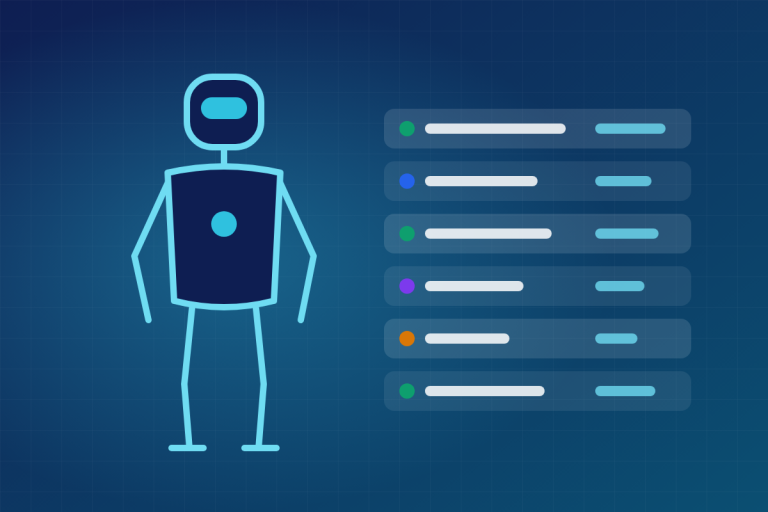
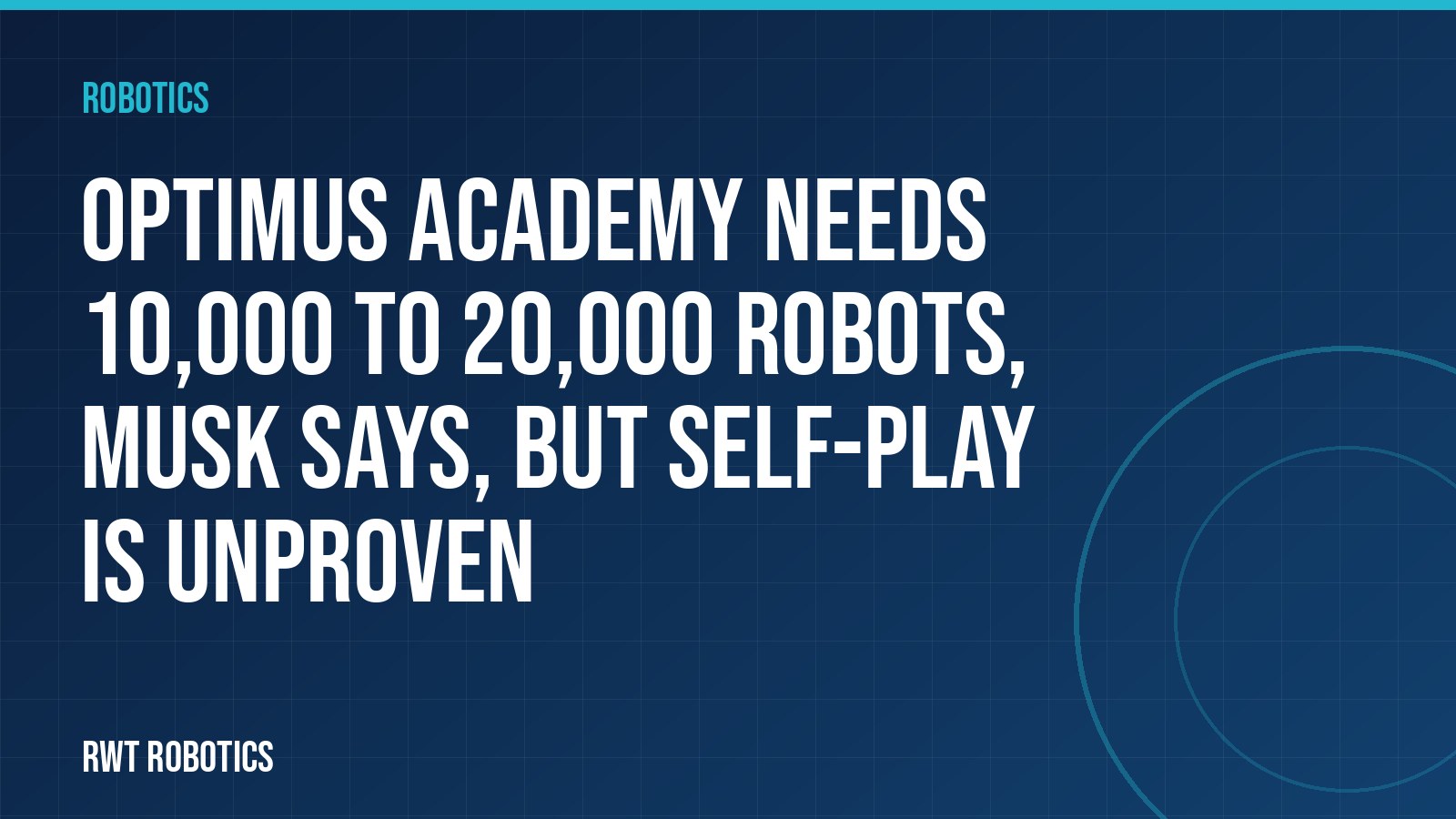
Elon Musk told Tesla’s Q3 earnings call on 21 October 2026 that Tesla needs “on the order of 10,000 or 20,000 bots” practicing tasks in what he called an “Optimus Academy,” according to reports of the call by The Next Web and Benzinga. The idea is that Optimus robots would improve through self-play across a very wide range of tasks. It is a described plan, not a demonstrated capability, and the core question is whether self-play training works on physical robots at all.
What we know
The figures come from the Tesla call itself, but we have not checked the transcript or webcast. Everything here relies on secondary reports from The Next Web, Benzinga, Teslarati and others. Treat the grades as provisional until the primary source is confirmed.
Musk explained the motivation plainly. Teslarati quotes him: “A big difference with Optimus versus the cars is we don’t have this vast fleet of cars from which we can gather training data.” Tesla’s driving software has millions of cars feeding it. Optimus has nothing comparable, so the Academy is meant to manufacture that data.
The method is not pure self-play. Ashok Elluswamy, who leads Tesla’s AI software team, said on the call that the robots would initially learn by watching humans perform tasks, according to The Next Web. Tesla would then bootstrap by building robots and having them do self-play. Headlines claiming Optimus “teaches itself” skip that first step.
The 20,000 number is also easy to misread. Benzinga says it is not a production target or a confirmed prerequisite for deployment. It is Musk’s estimate of how many units a training loop might need. A separate figure, a production rate of 20,000 robots a week, is a target Musk said is at least a year away because parts of the design are still being refined, per The Next Web.
On manufacturing, Musk said Tesla has installed most of a production line designed to eventually build one million robots a year. Teslarati reported in July 2026 that Tesla cleared the old Model S/X line in Fremont in 46 days to make room for it. Per Teslanorth, CFO Vaibhav Taneja said construction has started on a larger Optimus factory in Austin, and Musk acknowledged the current robots do not have perfected hands.
The concept is not new. Benzinga, via Finviz, reported that on 5 February 2026 Musk told podcaster Dwarkesh Patel, with Stripe’s John Collison present, that Tesla was building an Optimus academy for “self-play in reality,” citing “at least 10,000 Optimus robots, maybe 20-30,000.”
What is rumored
Business Insider reported earlier in October 2026, citing people familiar with the matter, that trainers at Fremont wore camera-equipped helmets to record tasks for Optimus to learn from. We saw this via The Next Web. Business Insider is an established outlet, but the claim rests on unnamed sources and Tesla has not confirmed it in anything we found. It would fit Elluswamy’s “watch humans first” description, but fitting a narrative is not confirmation.
What we don’t know yet
We found no demo footage of an Optimus Academy. We found no Tesla statement on whether any Academy training is autonomous, scripted, sped up or teleoperated. That is why this story is labeled DEMO ONLY.
We also do not know how many Optimus units exist today. A plan that calls for 10,000 to 20,000 robots depends on a production ramp that, by Musk’s own account, still has design work ahead.
Timelines are forward-looking. Musk expects an AI5 chip around April 2027. The Next Web, summarized by daily.dev, reports he said it would have around 10 times the computing power of AI4, while other outlets citing Musk on the same call put it at roughly 5 times the compute of a full two-chip AI4 computer. Teslarati reports he expects the AI, electromechanical design, reliability and service-life work to be done by the end of 2027, when Tesla plans to begin delivering Optimus to outside companies. None of that has happened yet.
What it means
The diagnosis is correct. Physical robots are starved for training data, and Musk is right that Optimus has no fleet equivalent to Tesla’s cars. Learning from human demonstrations and then refining through practice is a reasonable research direction.
The leap is scale. Self-play has worked well in simulation and games, where a reset costs nothing. Real robots break, drift, need resets and need humans nearby. Running tens of thousands of them in a productive training loop is an engineering problem nobody has publicly solved, and Tesla has shown no evidence that it has.
Until Tesla shows Academy training with clear disclosure of what is autonomous and what is not, this remains a stated plan from an earnings call. The fleet size matters less than the proof.
Follow every development in one place on our humanoid robot tracker.
Keep reading
 Robotics NewsUnitree H2-X kung fu video appears real but staged; live-demo fall report is unconfirmedUnitree's H2-X video appears real but staged. A live-demo fall is unconfirmed, the car lift is questioned, and…Oct 23, 2026 · 4 min read
 Robotics NewsUnitree’s 2028 humanoid target is conditional, and self-improving robots are unprovenUnitree's founder floats 80% of tasks by voice as soon as 2028. His self-improving robot loop is still…Oct 23, 2026 · 4 min read
 Robotics NewsAgility Robotics standardizes Digit 5 on Nvidia Thor, opens Pittsburgh centerAgility Robotics will use Nvidia IGX Thor in Digit 5 and is opening a Pittsburgh hub. Scale and…Oct 22, 2026 · 3 min read